
- All
- Product Name
- Product Keyword
- Product Model
- Product Summary
- Product Description
- Multi Field Search
Views: 0 Author: Site Editor Publish Time: 2026-07-06 Origin: Site


Facility managers and surface prep contractors face a persistent challenge in the field. They need an abrasive that removes tough coatings aggressively while maintaining strict environmental and worker safety standards. Traditional silica sand and heavy-metal slags pose severe health risks and incur rising disposal costs. Stringent OSHA regulations demand an immediate shift toward safer, compliant alternatives.
crushed glass blasting media provides a highly efficient solution to this problem. It balances aggressive coating removal and optimal surface profiling with essential worker safety. Evaluating its technical properties, operational trade-offs, and distinct differences from other glass abrasives is essential before procurement. Understanding these factors ensures you select the right media for your specific surface preparation requirements.
Safety & Compliance: Crushed glass contains less than 1% free silica and is free of heavy metals, significantly reducing respiratory risks and simplifying OSHA compliance.
Performance Profile: Its angular, irregular shape provides a fast, aggressive cut rate ideal for removing thick coatings, heavy corrosion, and mill scale, leaving a clean, etched surface profile.
Media Comparison: While crushed glass is angular and designed for cutting and profiling, glass beads blasting media is spherical and used for peening, cleaning, and producing a smooth, satin finish.
Reusability Limits: Due to its high friability, crushed glass is generally considered a direct-pressure, single-use or limited-use (1-2 cycles) media, making it highly cost-effective for open-air blasting but less ideal for continuous cabinet recycling.
This abrasive is manufactured entirely from 100% recycled post-consumer bottle glass. Sourcing materials from municipal recycling programs transforms waste into a valuable industrial tool. The glass undergoes extensive processing to become an inert, environmentally sustainable product. Diverting thousands of tons of glass from landfills reduces the overall environmental footprint of surface preparation projects. The resulting abrasive contains no organic materials and remains chemically inactive during the blasting process. Unlike mineral slags that may contain trace heavy metals from copper or coal processing, recycled bottle glass offers a clean, predictable chemical composition. This consistency allows contractors to bid on environmentally sensitive projects, such as over-water bridge maintenance or work near municipal water supplies, without the liability of introducing toxic heavy metals into the ecosystem.
Raw recycled glass requires rigorous industrial processing before it becomes a viable abrasive. Manufacturing facilities utilize advanced sorting and washing systems to eliminate paper labels, glue residues, sugars, and metal fragments. Magnetic separators extract ferrous metals, while air classifiers remove lightweight plastics and paper. Eddy current separators are often deployed to eject non-ferrous contaminants like aluminum bottle caps. This strict quality control ensures the final abrasive does not contaminate the target substrate. Clean media prevents coating failures caused by embedded organic matter or foreign debris. If sugar or glue residue remains in the glass, it can transfer to the blasted steel, creating a barrier that prevents industrial epoxies from bonding properly, ultimately leading to premature coating delamination.
The technical specifications of this media define its performance capabilities. It possesses a Mohs hardness ranging from 5.5 to 6.0, making it hard enough to cut through tough industrial coatings like marine epoxies and polyurethanes. The bulk density is relatively light compared to mineral slags, typically weighing between 70 and 80 pounds per cubic foot. Its grain shape is highly angular and irregular. These sharp edges act like microscopic cutting tools when propelled at high velocities, effectively shearing away surface contaminants. Because it is lighter than steel grit or garnet, operators can achieve a higher particle count per pound. This means more abrasive particles impact the surface per second, increasing the overall cleaning rate and allowing operators to move the blast nozzle faster across the substrate.
Manufacturers grade the media into specific mesh sizes to meet diverse surface profiling requirements. Coarse grades handle heavy industrial rust and thick marine epoxies. Medium grades offer a versatile solution for standard paint removal and structural steel preparation. Fine and extra-fine grades suit delicate surfaces and automotive restoration work. Mil-profile requirements directly dictate the selection of specific mesh sizes. Selecting the wrong mesh size can result in a profile that is too deep, requiring excessive primer to cover the peaks, or too shallow, causing the topcoat to fail.
Grit Grade |
Typical Mesh Size |
Expected Mil Profile |
Primary Application |
|---|---|---|---|
Coarse |
10/30 or 12/40 |
3.0 - 4.5 mils |
Heavy rust, thick epoxies, tank linings, ship hulls |
Medium |
20/40 or 30/60 |
2.0 - 3.0 mils |
Standard paint removal, structural steel, auto frames |
Fine |
40/70 or 50/100 |
1.0 - 2.0 mils |
Aluminum, fiberglass, graffiti removal, wood restoration |
Extra Fine |
70/100 or 100+ |
0.5 - 1.0 mils |
Delicate substrates, light oxidation, surface cleaning |
The angular edges of the glass fracture upon impact with the substrate. This fracturing action efficiently strips heavy epoxies, polyurethanes, rust, and mill scale. The sharp particles slice through the coating layers rather than merely pounding them. Because the media shatters, it transfers less kinetic energy directly into the base metal. This prevents the abrasive from embedding into the substrate, leaving a clean surface ready for immediate inspection and subsequent coating applications. When tackling multi-layered coating systems on industrial piping or storage tanks, the aggressive cutting action of the angular glass breaks the bond between the coating and the steel rapidly. Operators find that it cuts through elastomeric coatings that often cause rounder abrasives to bounce off.
Creating a consistent, white-metal finish with a sharp anchor pattern is a critical success criterion for high-performance industrial coating adhesion. The irregular shape of the glass gouges microscopic peaks and valleys into the metal. This profile increases the surface area, allowing primers and industrial coatings to mechanically lock onto the substrate. Achieving the correct mil-profile prevents premature coating delamination and extends the lifespan of the protective system. Industrial coating manufacturers specify exact profile depths for their products. Using angular glass allows contractors to dial in these specifications accurately by adjusting their blast pressure, standoff distance, and mesh size, ensuring compliance with SSPC and NACE surface preparation standards.
Fine grades of this abrasive excel in restoring vintage automotive components. Technicians use it extensively on non-ferrous cast metals, including aluminum engine cases, intake manifolds, and gearbox housings. Motorcycle parts heavily coated in grease and oxidation benefit from this precise cleaning method. It safely removes heavy oxidation, corrosion, and tarnish without causing dimensional changes. The media cleans effectively without damaging critical metal tolerances or altering machined mating surfaces. When operating at lower pressures, typically between 40 and 60 PSI, fine glass removes years of grime from cast aluminum without pitting the surface or destroying the original factory casting marks, which is vital for high-end automotive restoration.
Understanding substrate compatibility prevents accidental damage during the blasting process. Different materials require specific approaches to pressure and media selection.
Ferrous Metals: Highly effective on structural steel, heavy machinery, ship hulls, and iron castings. It rapidly removes mill scale and deep pitting rust, achieving SSPC-SP 10 Near-White Metal or SSPC-SP 5 White Metal finishes easily.
Concrete & Masonry: Ideal for exposing aggregate, removing line stripes from parking lots, and cleaning stubborn surface impurities like soot or graffiti from brickwork. It opens the pores of the concrete, preparing it for sealers or epoxy floor coatings.
Softer Substrates: Use extreme caution on wood, fiberglass, or thin-gauge aluminum. Lower blast pressures, increased standoff distance, and finer grits are mandatory to prevent warping, heat distortion, or substrate erosion.
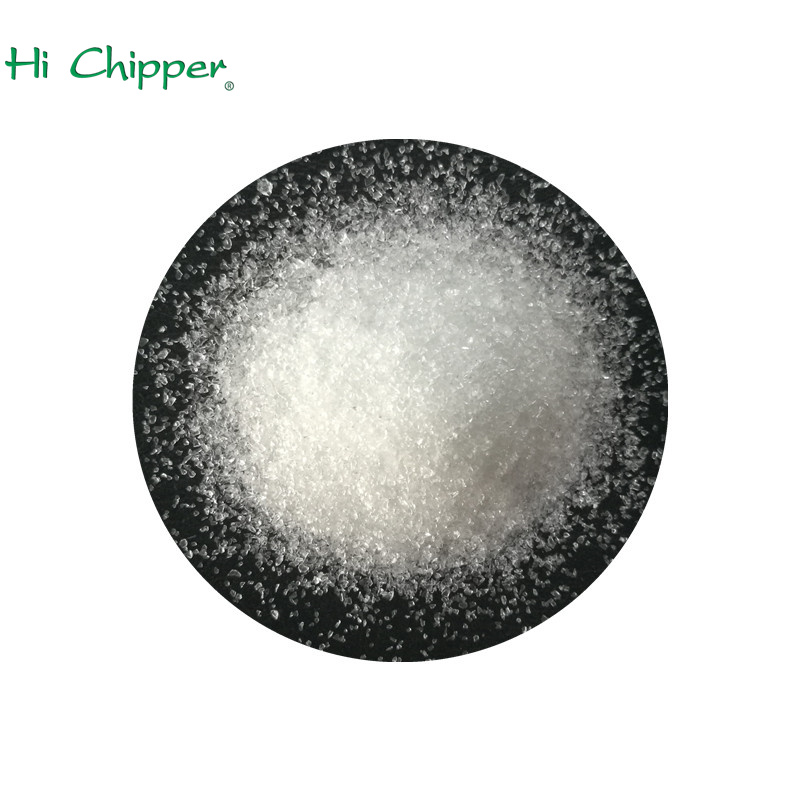
The absence of beryllium, heavy metals, and free silica serves as a primary driver for industrial adoption. Traditional sandblasting exposes operators to hazardous crystalline silica, leading to severe respiratory conditions like silicosis. Using an abrasive with less than 1% free silica mitigates these health risks. It reduces the need for extreme respiratory personal protective equipment compared to traditional sandblasting media, though standard blast hoods and supplied air are still required for general dust and coating hazards. This simplifies OSHA compliance, specifically regarding the respirable crystalline silica standard (29 CFR 1926.1153), and lowers liability for facility managers and contractors operating in confined spaces or populated areas.
The non-toxic, chemically inert nature of the media simplifies project logistics. Because it contains no heavy metals, the raw media itself does not trigger hazardous waste protocols. It simplifies clean-up and disposal procedures on large job sites. Often, it allows for non-hazardous waste classification, though this remains entirely dependent on the toxicity of the coating being removed. Always test the blasted debris for lead, hexavalent chromium, or other hazardous coating components before final disposal. When blasting clean steel or removing non-toxic coatings, the spent glass can often be disposed of as standard construction and demolition debris, significantly reducing backend project costs.
Analyzing the economic value reveals significant operational advantages. The per-pound cost may vary compared to traditional coal slag or copper slag. However, the lighter bulk density means you receive more volume per pound. This leads to lower media consumption rates during operation. Operators cover more square footage per bag of abrasive. Faster cutting speeds translate directly to reduced labor hours and faster overall project completion times. When you factor in the reduced cleanup time, lower disposal fees, and the sheer speed of coating removal, the overall project cost drops, making it a highly competitive option for large-scale industrial surface preparation.
The physical shape of the abrasive dictates its mechanical action on the surface. Contrast the angular, sharp edges of crushed glass with the spherical shape of Glass Beads Blasting Media. The angular glass cuts, shears, and etches the substrate to remove material aggressively. Conversely, the spherical beads impact, peen, and burnish the surface. Beads act like microscopic hammers, cleaning the metal without removing the base material or altering critical dimensions. This fundamental difference in shape means that angular glass is a destructive abrasive meant for preparation, while spherical beads are a non-destructive abrasive meant for finishing.
These two media types produce vastly different visual and structural results. Angular glass leaves a matte, frosted, and heavily profiled finish. This textured surface is strictly functional, designed to hold paint and heavy coatings. Spherical beads leave a bright, smooth, satin finish. This result is highly cosmetic and often serves as the final step for stainless steel fabrication, aluminum parts, and architectural metalwork. If you apply an industrial coating over a surface blasted with spherical beads, the coating will likely fail due to the lack of a mechanical anchor pattern.
Equipment selection depends heavily on the chosen media. Angular glass is predominantly used in open-air, wet or dry direct-pressure blast pots. Its high breakdown rate makes it suitable for environments where recovery is impractical. Spherical beads are the standard choice for enclosed blast cabinets. Inside a cabinet, the beads are recycled dozens of times for parts finishing, deburring, and cosmetic restoration, maximizing their economic value. Running angular glass in a standard blast cabinet will quickly destroy the cabinet's viewing window, erode the blast gun components, and overwhelm the dust collector due to the rapid pulverization of the media.
Feature |
Crushed Glass |
Glass Beads |
|---|---|---|
Shape |
Angular, irregular |
Spherical, round |
Primary Action |
Cutting, etching, stripping |
Peening, burnishing, cleaning |
Surface Finish |
Matte, frosted, heavy profile |
Smooth, bright, satin |
Reusability |
Low (1-2 cycles) |
High (up to 30 cycles) |
Typical Equipment |
Open-air blast pots, wet blasters |
Enclosed blast cabinets |
Understanding the physical reality of the media is crucial for project planning. This abrasive is highly friable. It shatters upon impact with hard surfaces like steel or concrete. This shattering action absorbs the impact energy, which protects the substrate from warping but limits the media's reclamation potential. The rapid breakdown generates dust and reduces the particle size instantly, altering the cutting characteristics for any subsequent passes. If you attempt to reuse the shattered media without proper classification, the resulting blast will produce a much shallower profile and a significantly slower cutting speed, as the sharp edges have been destroyed.
Set realistic expectations for reusability before starting a project. In standard dry blasting applications at high pressures (90-110 PSI), it is typically a single-use media. The particles pulverize into dust upon the first impact. It can sometimes be reclaimed 1-2 times if used at lower pressures (40-60 PSI) on softer substrates like wood or fiberglass. Specialized recovery systems with advanced air washes are required to separate the usable grit from the shattered dust. For most field contractors, the labor and equipment costs associated with recovering and cleaning the media far outweigh the cost of simply purchasing fresh abrasive.
The lack of high reusability requires a conceptual trade-off analysis. High-reusability media like steel grit require expensive recovery floors, vacuum systems, and enclosed facilities. The low initial cost of angular glass offsets its single-use nature. Fast cutting speeds reduce expensive labor hours. Reduced clean-up and disposal costs further improve the financial equation. This makes it highly economically viable for large-scale outdoor projects, bridge maintenance, water tower restorations, and pipeline preparation where media recovery is physically impossible or logistically prohibitive.
Because the glass shatters on impact, it generates a significant amount of nuisance dust. While free of toxic silica, this dust still poses visibility and respiratory challenges on the job site. Proper containment structures and ventilation systems are necessary for dry blasting in populated areas. Utilizing wet or vapor abrasive blasting equipment suppresses up to 95% of airborne particles. Encapsulating the abrasive in water keeps the job site clean, improves operator visibility, and prevents dust from migrating onto adjacent properties or sensitive machinery.
Wet blasting introduces specific operational nuances. While it successfully eliminates dust, water-based blasting on carbon steel creates a new problem: flash rusting. Bare steel oxidizes rapidly when exposed to water and oxygen. Operators must follow strict procedures to mitigate this risk.
Load the blast pot with the correct ratio of water and angular glass.
Add a high-quality, specialized rust inhibitor directly into the blast water.
Execute the blasting process, ensuring the surface is completely stripped of contaminants.
Perform a final rinse of the substrate using water treated with the same rust inhibitor to remove any residual shattered glass dust.
Use clean, dry compressed air to blow off standing water from horizontal surfaces and complex geometries.
Metering a rust inhibitor directly into the blast water prevents flash rusting for up to 72 hours, allowing sufficient time for primer application and ensuring the coating adheres properly to the steel.
Angular abrasives cause accelerated wear on blasting equipment. The sharp edges erode standard blast nozzles, hoses, and metering valves quickly. Inspect equipment daily to prevent pressure loss and safety hazards. Use highly durable nozzle materials when running angular glass. Boron carbide or silicon carbide nozzles offer superior wear resistance compared to standard tungsten carbide. Upgrading your wear parts reduces downtime, maintains a consistent blast pattern, and ensures you are not wasting compressed air through a worn-out nozzle orifice.
Proper storage is critical to maintain media flowability. The abrasive tends to clump if exposed to moisture or high humidity during storage. Clumped media clogs metering valves, halts production, and requires operators to manually clear blockages from the blast pot. Store bags in a dry, climate-controlled environment off the ground, preferably on pallets wrapped in plastic. Ensure your air compressors utilize high-quality moisture separators, aftercoolers, and air dryers. Dry air prevents moisture from entering the blast pot and causing erratic media flow, ensuring a smooth, consistent blasting operation.
Specify angular glass for heavy profiling, rust removal, and corrosion stripping on steel, concrete, or non-ferrous castings.
Pivot to spherical glass beads if your project requires cosmetic finishing, peening, or continuous recycling inside an enclosed blast cabinet.
Consult with your abrasive supplier to match the exact mesh size to your project's specific mil-profile requirements.
Request a material safety data sheet (MSDS) from the manufacturer to maintain proper compliance documentation on your job site.
Upgrade your blast nozzles to boron carbide or silicon carbide to handle the abrasive wear of angular media.
A: No, it contains less than 1% free silica. This distinguishes it from hazardous crystalline silica sand, significantly reducing the risk of silicosis and simplifying OSHA compliance on the job site.
A: While possible, its high friability and rapid dust generation make it less ideal. It breaks down quickly, making it less economical than spherical beads for continuous cabinet recycling.
A: Use coarse to medium grits (like 10/30 or 20/40 mesh) for heavy rust and mill scale on structural steel. Use finer grits (like 40/70 mesh) for light corrosion on sensitive metals.
A: You can typically reuse it 1-2 times maximum. The particles shatter upon impact with hard surfaces, turning into dust and losing their cutting edges rapidly.
A: Yes, it is suitable for non-ferrous cast metals when using fine grits and managed blast pressures. It cleans heavy corrosion without causing dimensional warping or damaging critical tolerances.
A: No, it is chemically inert and leaves a clean, non-reactive surface. However, you must blow off any residual shattered dust with clean, dry compressed air prior to coating application.
A: Yes, it is highly compatible with vapor and wet blasting equipment to eliminate airborne dust. When wet blasting carbon steel, you must use flash rust inhibitors to protect the bare metal.
