
- All
- Product Name
- Product Keyword
- Product Model
- Product Summary
- Product Description
- Multi Field Search
Views: 0 Author: Site Editor Publish Time: 2026-07-03 Origin: Site


Environmental regulations and the push for LEED-certified developments force project managers and landscape architects to re-evaluate foundational materials. Balancing the demand for sustainable, recycled materials with the non-negotiable requirements of structural integrity, predictable compaction, and long-term performance remains a daily site challenge. Modern construction requires materials that do not compromise on safety or durability while meeting green building standards. You need aggregates that perform under heavy loads, drain efficiently, and pass strict municipal inspections without causing project delays.
This article provides an objective comparison of recycled crushed glass against traditional sand, gravel, and crushed stone. We will determine its viability across landscaping, hardscaping, and structural applications, helping you make informed material selections for your next site development.
Drainage Superiority: Crushed glass consistently matches or exceeds traditional gravel in filtration rates and water retention capabilities due to its non-porous nature and angularity.
Aesthetic and Functional Versatility: Specialized variants, such as white crushed glass, provide high-end architectural finishes while maintaining base utility.
Structural Trade-offs: While highly effective as a sub-base or landscaping aggregate, utilizing glass in concrete mixes requires specific mitigation strategies for Alkali-Silica Reaction (ASR).
Lifecycle Value: The initial sourcing costs of recycled glass aggregates may vary by region, but long-term benefits in sustainability compliance and reduced material degradation often yield a lower overall project expenditure.
Commercial and residential projects demand strict baseline requirements for compressive strength and shear resistance. Any aggregate used must support the anticipated loads without excessive settling, rutting, or sub-grade failure. When you lay a foundation or a driveway, the base material takes the brunt of the mechanical stress. Standard testing metrics, such as the Proctor compaction test, are required for any aggregate substitute to ensure it meets the necessary density and stability standards for foundational use. You cannot simply swap out crushed limestone for a recycled alternative without verifying that the new material achieves the required 95% standard Proctor density. Field engineers rely on these metrics to sign off on sub-base stability before pouring concrete or laying asphalt.
To evaluate structural integrity, site managers look at several specific indicators:
Shear strength under dynamic loading from heavy machinery.
Resistance to degradation during the compaction process.
Ability to maintain interlocking friction between angular particles.
Moisture-density relationships during standard compaction testing.
Modern construction increasingly necessitates recycled content to meet local municipal codes and green building standards. Utilizing recycled materials helps achieve LEED certification points, specifically under the Materials and Resources category. Evaluating the carbon footprint of material sourcing and transportation is a standard part of the bidding process. Project managers must reference State and Federal DOT standard specifications to ensure compliance and verify the environmental benefits of their material choices. Diverting waste from landfills and repurposing it into structural fill directly impacts a project's sustainability rating. You have to track the mileage from the processing plant to the job site to accurately calculate the transportation emissions offset.
Sourcing materials that serve dual purposes presents a unique challenge on mixed-use developments. High-visibility zones require materials that provide robust structural base support while delivering a premium visual finish. Applications like exposed aggregate concrete, architectural pathways, and decorative landscaping demand materials that maintain their appearance over time without compromising on foundational integrity. You need an aggregate that won't degrade, discolor, or break down into dust after a single winter season. The material must resist UV fading and withstand regular pedestrian or vehicular traffic while keeping its architectural appeal intact.
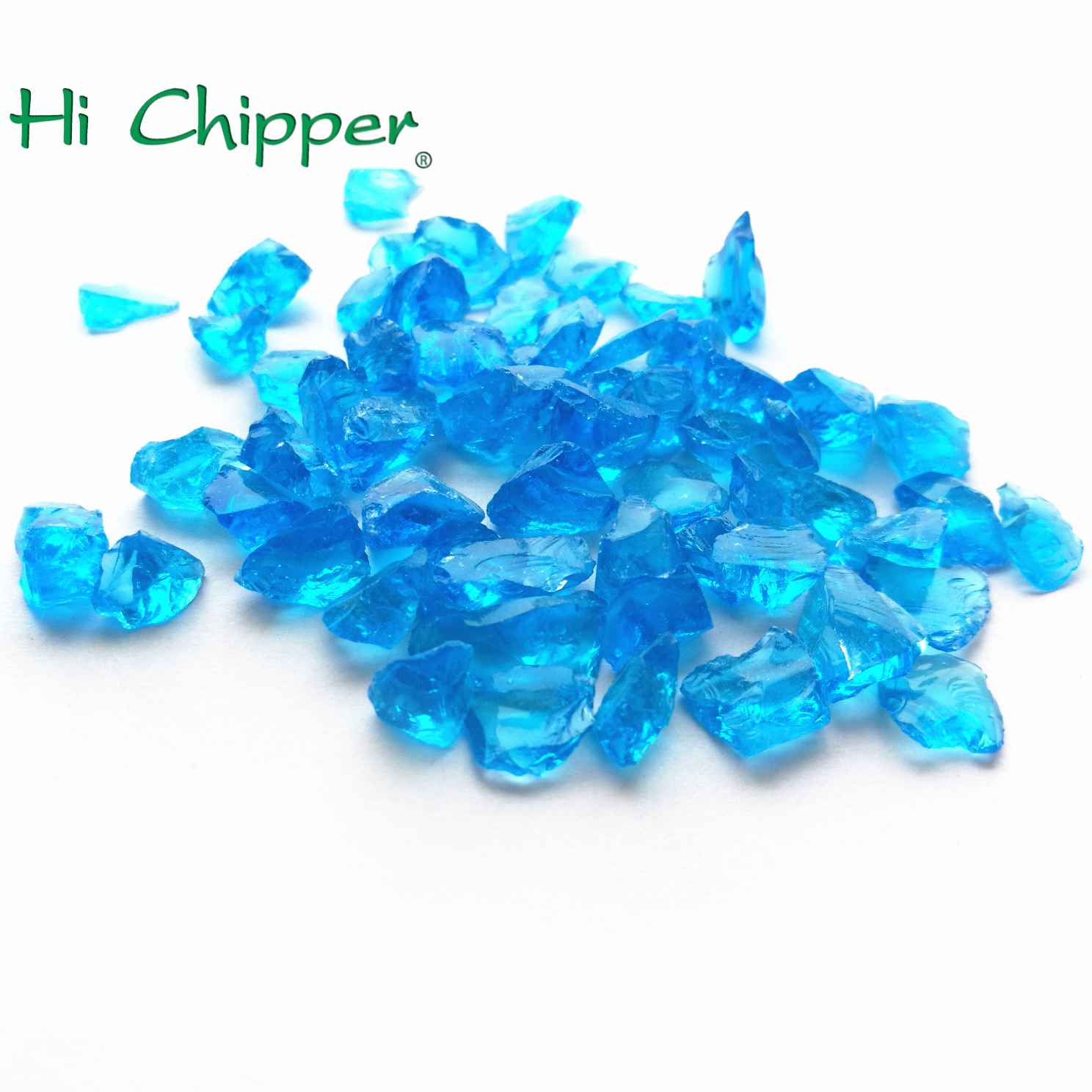
Traditional aggregates represent the established industry standard. They offer predictable supply chains, known compaction behaviors, and widespread contractor familiarity. When a crew orders a load of 3/4-inch clear gravel, they know exactly how it will spread, grade, and compact. However, natural aggregate mining carries significant environmental and extraction costs. Quarrying operations involve habitat destruction, high energy consumption during rock crushing, and heavy transportation emissions. As local quarries deplete their reserves, the hauling distances to job sites increase, driving up the environmental impact and logistical complexity of sourcing standard crushed stone.
Construction-grade Crushed Glass undergoes specific sizing, tumbling processes, and the removal of non-glass debris to qualify for use. The processing phases convert post-consumer waste glass into a safe, viable construction material. This involves crushing the raw glass, screening it through industrial sieves to achieve uniform gradation, and cleaning it to remove paper labels, plastics, and organic residue. The tumbling process rounds off the sharp edges, resulting in an aggregate that is safe to handle and performs similarly to angular sand or fine gravel. Quality control at the processing facility ensures the final product meets the strict gradation curves required by civil engineers.
The processing of RCG generally follows these steps:
Collection and initial sorting of post-consumer glass bottles and industrial glass waste.
Primary crushing to break down large glass pieces into manageable fragments.
Magnetic separation and air classification to remove ferrous metals and lightweight contaminants like paper.
Secondary crushing and tumbling to eliminate sharp edges and achieve the target particle size.
Final screening and grading to separate the material into specific aggregate classifications.
Recycled glass often exhibits superior permeability rates compared to traditional gravel. The non-absorbent surface of glass prevents freeze-thaw degradation, a common issue with porous natural stones that absorb water, freeze, and fracture. This improved drainage profile supports soil health and root aeration in surrounding landscaping, effectively mitigating waterlogged soils and compaction-induced root rot. When used in French drains or retaining wall backfill, the angular nature of the glass creates consistent void spaces that allow water to flow freely without clogging. Unlike limestone, which can break down and create fine dust that clogs geotextile fabrics, glass remains stable and maintains its filtration capacity over decades.
Property | Traditional Gravel | Recycled Crushed Glass |
|---|---|---|
Permeability | Moderate to High | High to Very High |
Water Absorption | Low to Moderate (depends on rock type) | Zero (Non-porous) |
Freeze-Thaw Resistance | Variable (porous stones degrade) | Excellent (no water absorption) |
Compaction Behavior | Predictable, standard methods | Requires moisture control, standard methods |
Specific Gravity | 2.6 - 2.8 | 2.4 - 2.5 (Lighter) |
The angularity of the glass particles provides excellent interlocking capabilities, often outperforming rounded river rock in base stability. Glass has a different specific gravity than traditional aggregates. The lighter weight of glass impacts transportation and volume-to-weight purchasing ratios, allowing for more volume per ton. This means a standard dump truck can carry a larger volume of material while staying under legal weight limits. During installation, crews use standard vibratory plate compactors or smooth drum rollers. The material locks together tightly, creating a stable sub-base that resists rutting under load.
Specialized materials like White Crushed Glass offer significant visual benefits in architectural concrete, terrazzo, and high-end landscape beds. Glass provides exceptional colorfastness and UV resistance. Unlike dyed wood mulches that rot or natural stones that may fade and discolor over time when exposed to the elements, glass retains its original appearance indefinitely. This makes it highly desirable for exposed aggregate finishes in plazas, decorative borders around commercial buildings, and reflective ground cover in modern landscape designs.
In landscaping, this aggregate performs exceptionally well in French drains, retaining wall backfills, and decorative ground cover. It offers effective weed suppression capabilities by creating a dense, inorganic layer that prevents seed germination. It also assists in soil temperature regulation, maintaining a stable environment for plant roots while providing a clean, modern aesthetic. Landscapers use it as a permanent mulch alternative in xeriscaping projects, reducing maintenance labor and eliminating the need for annual mulch replacement.
Empirical data supports using glass as a partial fine aggregate replacement in concrete. However, Federal Highway Administration (FHWA) guidelines for asphalt concrete indicate that it can serve as a portion of fine aggregate in hot mix asphalt (HMA). This integration impacts workability, curing times, final tensile strength, and binder-to-aggregate adhesion. You must use anti-stripping agents in the asphalt mix to ensure the liquid bitumen adheres properly to the smooth glass surfaces. In Portland cement concrete, replacing more than 10-20% of the fine aggregate requires careful mix design to maintain compressive strength and prevent long-term durability issues.
Recycled glass is viable as a 100% substitute for natural aggregates in utility trenching and pipe bedding due to its flowability and self-compacting traits. It flows easily around PVC and ductile iron pipes, providing uniform support without the need for heavy mechanical compaction right against the pipe walls. Blending it with traditional natural aggregates, such as a 50/50 blend with crushed stone, helps meet strict structural sub-grade requirements for heavy-duty pavements while still utilizing recycled materials and reducing the overall weight of the fill.
The regional availability of processing facilities varies significantly compared to the ubiquitous presence of gravel quarries. Local recycling infrastructure directly impacts lead times and bulk availability. Projects in metropolitan areas with robust municipal recycling programs will find sourcing much easier and more reliable. In rural areas, the transportation distance from the nearest glass beneficiation plant might offset the environmental and logistical benefits. Project estimators must verify local stockpile volumes before committing to large-scale substitutions in their material takeoffs.
Calculating total project cost requires comparing upfront per-ton pricing against long-term savings. The lighter weight reduces transportation costs per cubic yard. Additionally, reduced maintenance, lack of replacement needs in landscaping, and potential tax incentives for using recycled materials contribute to a favorable lifecycle cost. You spend less labor on grading and trench backfilling because the material flows and compacts efficiently. Over a ten-year period, a commercial property saves significantly on landscape maintenance and drainage repairs by utilizing a non-degrading aggregate.
The primary risk of using glass in Portland cement is expansion and cracking due to ASR. The silica in the glass reacts with the alkalis in the cement paste, forming a gel that swells in the presence of moisture, eventually spalling the concrete. Proven mitigation strategies include using supplementary cementitious materials (SCMs) like fly ash, slag cement, or silica fume. You must also strictly control the glass particle size; grinding the glass into a fine powder (glass pozzolan) actually mitigates ASR, whereas larger glass chunks exacerbate it. Structural engineers must review and approve the specific mix design before any concrete is poured on site.
Contractor concerns regarding sharp edges are valid when dealing with raw broken glass. Proper tumbling and screening requirements ensure the material is safe for manual handling and pedestrian traffic. Processed aggregates lose their sharp edges, making them safe for widespread construction and landscaping use. Workers handle the processed material with standard PPE—gloves and safety glasses—just as they would with crushed silica sand or sharp gravel. Site safety managers should request a sample to verify the tumbling quality before accepting a bulk delivery.
Poorly processed recycled material carries risks of organic matter, plastics, or sugars remaining in the aggregate. Sugars from unwashed beverage bottles can severely retard the setting time of concrete. Establish a strict checklist for vetting suppliers, requesting gradation reports and cleanliness certifications to ensure the material meets project specifications. You need a visual inspection protocol at the weigh station or site entrance to reject loads that contain excessive paper labels, foil, or municipal solid waste.
Site inspectors look for specific criteria when approving alternative aggregates on-site. They verify maximum allowable percentages of deleterious materials. On-site testing protocols for compaction moisture-sensitivity and aggregate blending accuracy are essential for quality assurance.
Conduct visual inspections for plastic and paper contamination upon delivery.
Perform field density tests using a nuclear gauge to verify compaction.
Check the moisture content, as glass does not absorb water, making the optimum moisture content lower than that of soil or porous stone.
Verify the blend ratios if using a 50/50 mix with natural gravel.
Recycled glass serves as a highly effective, environmentally superior alternative for drainage, backfill, and landscaping. However, it requires engineered mix designs when used in structural concrete or hot mix asphalt. Recommend traditional aggregates for projects with extreme load-bearing requirements or tight budgets in regions lacking glass recycling infrastructure. Recommend recycled glass for LEED-targeted projects, advanced drainage solutions, and premium aesthetic applications.
Request physical material samples from local suppliers to verify edge tumbling and cleanliness.
Review local supplier gradation specifications against your project's engineering requirements.
Consult with a structural engineer to approve specific concrete and asphalt mix designs incorporating SCMs.
Calculate the volume-to-weight ratio for your specific site to optimize transportation logistics.
A: Yes. The industrial tumbling and screening process removes sharp edges, making it safe for manual handling by landscape crews and for use in pedestrian areas without the risk of cuts.
A: While it serves well as a partial replacement, 100% substitution in structural concrete is avoided due to Alkali-Silica Reaction (ASR) risks, which cause expansion and cracking, along with potential compressive strength variations.
A: Glass is entirely non-porous, non-staining, and colorfast. Marble chips are porous, meaning they absorb dirt, grow algae, discolor, and physically degrade over time when exposed to weather.
A: The angularity and lack of fine dust in properly screened glass create superior, consistent void spaces for water flow. This prevents clogging and benefits soil health and root systems.
A: It directly contributes to Materials and Resources credits by utilizing post-consumer recycled content, reducing the demand for virgin aggregate mining, and diverting significant waste volumes from local landfills.
A: Standard vibratory plate compaction is required. Because it does not absorb water, its lighter weight and moisture sensitivity necessitate slight adjustments in handling and moisture monitoring during installation.
A: According to FHWA studies, properly screened waste glass successfully replaces a portion of fine aggregate in hot mix asphalt, provided it meets specific gradation curves and uses anti-stripping agents for binder cohesion.

