
- All
- Product Name
- Product Keyword
- Product Model
- Product Summary
- Product Description
- Multi Field Search
Views: 0 Author: Site Editor Publish Time: 2026-07-10 Origin: Site


The industry is shifting away from traditional silica sand toward advanced alternative filtration solutions. This transition is driven by the need for operational efficiency, water conservation, and long-term cost reduction. Facility managers and homeowners are realizing that standard sand beds often fall short when dealing with high bather loads and strict sanitation requirements. While glass media delivers superior micron filtration, selecting the incorrect particle size, type, or layering configuration can cause serious issues. Improper sizing leads to hydraulic channeling, media migration directly into the pool, and premature pump wear. The effectiveness of the filtration system depends entirely on matching the physical properties of the media to the specific vessel and flow dynamics. This technical evaluation framework helps specify the exact grade, volume, and type of glass media required for specific filter vessels and hydraulic setups.
Volume Conversion Reality: Glass media is less dense than sand; precise calculation requires applying an 80% weight ratio to avoid overfilling and restricting flow.
Particle Size Dictates Performance: Fine grades (0.5mm–1.0mm) handle primary filtration down to 5-9 microns, while coarse grades are strictly for structural support over the laterals.
The Three Pillars of Glass Media: Understanding the functional differences between Crushed Glass, Activated Glass (AFM), and Spherical Glass Beads is vital for optimizing system hydraulics.
Reduced Backwash Overhead: Because glass is lighter than sand, it fluidizes faster, reducing backwash times by up to 30% and significantly lowering water consumption.
Layering is Non-Negotiable for Commercial: Large vessels require multi-grade stratification to maintain bed integrity under high-pressure, high-bather-load conditions.
A successful filtration upgrade must deliver measurable improvements across several operational metrics. You should expect reduced water turbidity, lower chemical usage, minimized water consumption during backwashing, and an extended media lifespan. Achieving these goals indicates that the new media is functioning correctly within the hydraulic parameters of the vessel. Upgrading now mitigates rising water costs and meets stricter commercial sanitation guidelines. Older sand beds harbor bacteria and require frequent, lengthy backwashes that waste thousands of gallons of treated water annually. Modernizing the filter bed directly addresses these operational inefficiencies. When you open an old sand filter, you often find calcified chunks and deep channels where water simply bypasses the media. Replacing this with a modern alternative restores the vessel's original design flow rate.
Field experience shows that facilities struggling with cloudy water during peak summer months often trace the issue back to degraded sand. The sharp edges of silica sand wear down over time, becoming smooth and losing their ability to trap fine particulate. This degradation forces operators to rely heavily on clarifiers and flocculants. Upgrading the media eliminates this dependency, allowing the mechanical filtration system to do the heavy lifting. Success is measured by the clarity of the water and the reduction in chemical demand.
Traditional 20-grade silica sand filters particles down to 20–40 microns and typically lasts 3–5 years before requiring replacement. In contrast, pool glass filter media captures debris as small as 5–9 microns and can last over 10 years. The long-term return on investment is substantial due to reduced maintenance and extended lifespan. Compared to cartridge filters, glass offers a low-maintenance alternative that eliminates the need for manual element washing. Against Diatomaceous Earth (D.E.), glass provides an eco-friendly, non-hazardous option without sacrificing low-micron performance. Facility operators appreciate the automated backwash capabilities of media filters combined with the enhanced clarity provided by glass.
Cartridge filters require physical removal and chemical soaking, which consumes significant labor hours. D.E. filters provide excellent clarity but involve handling hazardous dust and managing complex backwash separation tanks to comply with municipal discharge codes. Glass media bridges this gap. It provides near-D.E. clarity while utilizing the simple, automated backwash mechanics of a standard sand filter. This makes it highly attractive for facilities looking to reduce maintenance hours without compromising water quality.
The negative static charge, or zeta potential, of activated and standard glass attracts fine organic particles and metal ions. This electrostatic attraction prevents the clumping and channeling commonly seen in aging sand beds. The media remains loose and effective, maintaining a consistent flow rate through the vessel. Because glass has a lower bulk density than sand, the filter bed expands and fluidizes at lower backwash velocities. This faster cleaning cycle reduces water loss and sewage costs. The efficient fluidization mechanics ensure that trapped debris is quickly expelled, restoring the filter to peak performance with minimal downtime.
During a backwash cycle, the goal is to lift and separate the media grains so trapped dirt can be flushed out the waste line. Sand is heavy and requires a high flow rate to achieve this fluidization. Glass, being lighter, lifts easily. This means you can achieve a thorough cleaning in a fraction of the time. Operators often see backwash times drop from five minutes down to two or three minutes. Over a year, this reduction translates to massive water savings, especially for large commercial aquatic facilities.
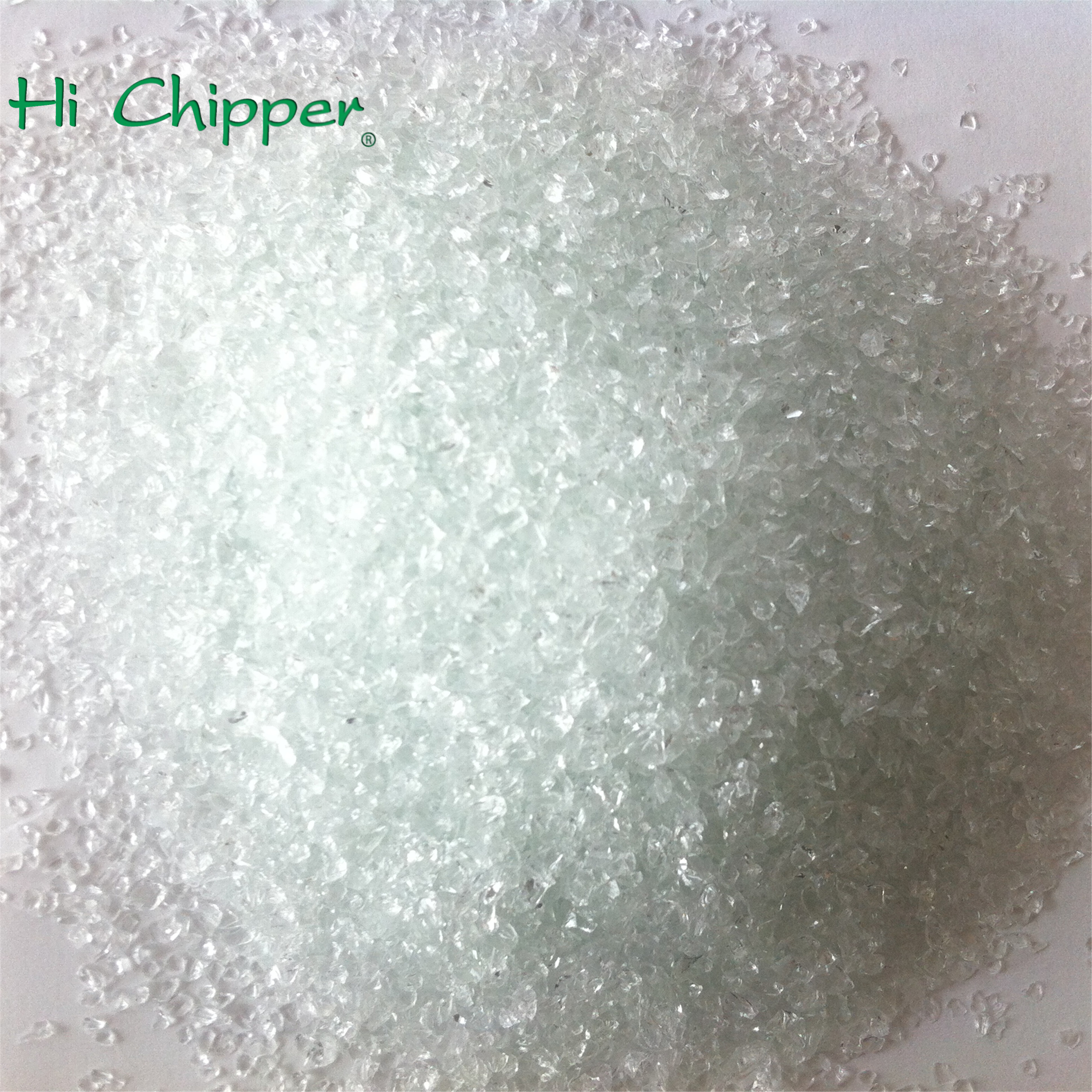
The fine grade serves as the top layer of the filter bed, where 90% of particulate capture occurs. This specific particle size is engineered to trap microscopic debris while allowing water to pass through efficiently. It forms the active filtration zone that directly impacts water clarity. The relationship between this particle size and the optimal flow rate is critical for both residential and commercial vessels. If the flow rate is too high, the fine media can compact, increasing hydraulic resistance and reducing filtration efficiency. Maintaining the correct velocity prevents bed compaction and ensures continuous, effective filtration.
When inspecting a filter bed, the top few inches of this fine layer do the majority of the work. You will often find a thin layer of trapped dirt and oils resting right on the surface. The 0.5mm to 1.0mm sizing is specific. Anything smaller would create too much resistance and potentially pass through the laterals. Anything larger would allow fine debris to slip through the voids between the grains. This precise sizing is what gives the media its high performance rating.
Coarse media must be placed at the bottom of the tank to cover and protect the laterals. This base layer acts as a structural support, preventing the finer top layer from migrating into the lateral slots and entering the pool. It also ensures even water distribution during both filtration and backwash cycles. Skipping the coarse layer in filters larger than 24 inches leads to severe operational failures. Without this support bed, the fine media can pack tightly around the laterals, causing damage, media migration, and restricted water return. Proper stratification is essential for maintaining the integrity of the filter system.
Think of the coarse layer as the foundation of a building. It doesn't do the actual filtering, but it holds everything else up. The laterals at the bottom of the tank have small slots designed to let water in while keeping media out. If you pour fine media directly over these slots, the grains can wedge into the openings, restricting flow or breaking the plastic laterals under pressure. The coarse grade creates a buffer zone, allowing water to flow freely into the laterals without carrying media with it.
When sourcing media, always check the manufacturer specification sheets for uniformity coefficients. A tight uniformity coefficient ensures that the particles are consistent in size, which is necessary for predictable hydraulic performance and effective filtration. Low-quality glass processing presents significant risks. Excessive dust, sub-0.5mm particles, or sharp, non-tumbled shards pose safety hazards during installation and can cause packing issues within the filter. High-quality media is thoroughly washed, sized, and tumbled to remove sharp edges and fine dust.
You can often spot low-quality media right out of the bag. If pouring it creates a massive cloud of silica dust, the manufacturer skipped the final washing phase. This dust will end up in your pool, causing a cloudy mess that takes days to clear. Furthermore, if the grains are sharp and jagged, they will lock together inside the tank, creating a solid block that cannot be backwashed. Always verify that the media has been properly tumbled and graded before loading it into a vessel.
Feature | Crushed Glass | Activated Glass (AFM) | Glass Beads |
|---|---|---|---|
Geometry | Angular, sub-granular | Hydrophobic, treated surface | Perfect spherical shape |
Surface Area | High surface area | 100% bio-resistant | Lowest hydraulic drag |
Primary Benefit | Cost-effective | Eliminates trichoramines | Minimal backwash force |
Best Application | High-debris residential | Premium clinical standard | Variable speed pump systems |
Crushed Glass Filter Media features an angular, sub-granular structure. The increased surface area improves physical debris entrapment, making it highly effective at catching fine particles. However, this structure requires strict manufacturing quality control to ensure all edges are fully tumbled and safe to handle during installation. This media type hits its sweet spot in high-debris residential and light-commercial environments. It provides an economical upgrade over traditional sand, offering better clarity and longer intervals between media replacements.
The angular nature of crushed glass means the grains pack together loosely, leaving microscopic pathways for water to travel. As water navigates these jagged pathways, debris is snagged on the rough edges. This physical entrapment is highly efficient. When installing crushed glass, operators must ensure they are using a product specifically manufactured for pool filtration, not industrial abrasive blasting glass, which contains dangerous heavy metals and sharp shards.
Standard glass undergoes a specific chemical and thermal activation process to modify its surface chemistry. This treatment creates a self-sterilizing media that actively resists biological growth. The modified surface prevents organic matter from adhering to the grains. Activated glass resists bio-fouling and biofilm colonization. In silica sand and standard crushed glass, bacteria form protective matrices that cause hydraulic channeling and reduce filtration efficiency. AFM prevents the formation of harmful trichloramines, eliminating the harsh chlorine smell often found in indoor pool environments.
Biofilm is the enemy of any filter bed. It acts like a glue, sticking sand or glass grains together into solid lumps. Once these lumps form, water simply channels around them, bypassing the filtration process entirely. The activation process changes the molecular charge of the glass surface, making it impossible for bacteria to anchor themselves. This keeps the filter bed loose, clean, and highly efficient for years, drastically reducing the demand on the chemical sanitation system.
Swimming Pool Glass Beads feature a precise spherical structure. The uniform shape prevents the media from interlocking, which minimizes hydraulic resistance. This allows for the most efficient, low-friction backwashing process available in media filtration. They are ideal for systems utilizing low-horsepower variable speed pumps or indoor commercial pools prioritizing energy efficiency. The reduced hydraulic drag translates directly to lower energy consumption at the pump.
Because the beads are perfectly round, water flows around them with almost zero friction. This means a variable speed pump can be dialed down to a much lower RPM while still maintaining the required turnover rate. The energy savings from running the pump at a lower speed quickly offset the initial cost of the beads. Additionally, during backwash, the spherical shape allows the bed to fluidize instantly, requiring very little water pressure to lift and clean the media.
Converting a sand filter to glass requires a specific mathematical framework due to the difference in bulk density. You cannot simply swap the media pound for pound. Overfilling the vessel will restrict flow and cause media to blow back into the pool during backwashing. Use this formula: Sand Requirement (lbs) x 0.80 = Glass Requirement (lbs). For example, if your filter requires 100 lbs of sand, you need 80 lbs of glass. If it requires 300 lbs of sand, you will need 240 lbs of glass. Always adhere to this ratio to ensure proper freeboard space inside the tank.
Freeboard space is the empty area between the top of the media bed and the upper internal plumbing (the diffuser). This space is critical. During a backwash, the media bed expands upward. If you fill the tank with too much glass, the expanding bed will hit the diffuser and get pushed out the waste line. The 80% rule ensures that the lighter glass media has enough room to expand and clean itself without escaping the vessel.
Filters under 24 inches in diameter generally fall below the threshold requiring complex stratification. In these smaller vessels, a single fine grade (0.5mm–1.0mm) can often be utilized safely without a coarse support layer, provided the lateral slots are appropriately sized. For standard side-mount or top-mount vessels requiring dual-layering, the standard residential ratio applies. Use a 20% coarse base over the laterals and an 80% fine top filtration layer. This configuration protects the internal plumbing while maximizing the active filtration depth.
When loading a dual-grade system, precision is key. You must pour the coarse layer first, spreading it evenly by hand to ensure all laterals are completely covered. Only after the coarse foundation is perfectly level should you begin adding the fine grade. Dumping the fine grade too quickly can displace the coarse layer, exposing the laterals and defeating the purpose of the stratification.
Large horizontal or vertical commercial vessels require a three-tier stratification system. This setup includes a coarse gravel base, a medium intermediate layer, and a fine top layer. This complex layering is necessary to handle massive water volumes and high bather loads. The physics of this configuration prevent bed fluidization and layer mixing during high-velocity commercial backwash cycles. The graded layers ensure that water is distributed evenly across the entire surface area of the bed, preventing localized channeling and maintaining structural integrity under pressure.
In a massive commercial horizontal filter, water distribution is a major engineering challenge. If the media bed is not perfectly stratified, the high-pressure water entering the tank will drill holes straight through the media. The three-tier system acts as a baffle. The coarse and medium layers diffuse the water pressure, forcing it to spread out evenly before it hits the fine filtration layer. This ensures that every square inch of the filter bed is utilized.
The lower density of glass media interacts differently with Variable Speed Pump programming compared to sand. Because water passes through glass with less resistance, you must adjust the pump schedules to optimize the flow velocity (gpm/sq.ft.) for the specific filtration depth. Recalibrate pump speeds to ensure the velocity is optimized for filtration rather than forcing micro-debris through the bed. Running the pump too fast can push fine particles completely through the media, negating the benefits of the upgrade. Slower, continuous flow yields the best water clarity.
Many operators make the mistake of leaving their VSP running at the old sand settings after upgrading to glass. Because glass offers less resistance, the pump will actually move more water at the same RPM. This increased flow rate can exceed the design parameters of the filter, driving dirt straight through the glass bed and back into the pool. You must dial back the RPMs to match the optimal filtration velocity of the new media.
Commercial and public aquatic applications have an absolute requirement for NSF/ANSI Standard 50 certification. Any media installed in these facilities must meet these rigorous safety and performance standards to ensure public health. Always verify compliance with local health department regulations when switching media types. Some jurisdictions require updated documentation or specific engineering approvals before allowing a transition from sand to alternative media in public pools.
Health inspectors look for the NSF 50 stamp on the media packaging. If you install uncertified glass in a commercial facility, you risk being shut down. The certification guarantees that the media has been tested for heavy metal leaching, sizing consistency, and overall filtration efficacy. Never cut corners by using uncertified industrial glass in a public aquatic facility.
Media returning to the pool is a common failure point that must be addressed during installation. This issue usually stems from specific mechanical or volumetric errors rather than a flaw in the media itself. Isolate the root causes: overfilling past the calculated 80% volume threshold, damaged or cracked laterals, incorrect grain size selection for the lateral slot size, or improper backwash valve seating. Ensuring the correct volume and verifying the integrity of the internal plumbing will prevent blowback.
If you see glass on the pool floor immediately after installation, stop the pump. The most common culprit is a cracked lateral. When removing the old sand, it is very easy to accidentally bump and crack the brittle plastic laterals at the bottom of the tank. Always perform a thorough visual and tactile inspection of the laterals before adding the new coarse base layer.
Adjusting backwash flow rates is crucial when using glass. Because glass is lighter than sand, standard sand backwash velocities can lift the media too high, resulting in media loss down the waste line. Advise operators to throttle valves or make variable speed adjustments during the backwash cycle. The goal is to fluidize the bed enough to release trapped debris without lifting the media into the multiport valve or waste plumbing.
To calibrate the backwash, install a sight glass on the waste line. Start the backwash cycle at a low RPM and slowly increase the speed. Watch the sight glass. You want to see dirty water flowing out, but no glass grains. If you see glass grains passing through the sight glass, you are pushing too much water and lifting the bed too high. Dial the RPM back until the glass stops escaping.
Follow a mandatory step-by-step post-installation protocol to ensure the system operates correctly from day one.
Pre-fill the filter vessel with water to cushion the laterals before pouring media.
Add coarse media first, ensuring uniform coverage over the laterals, followed by the fine grade.
Perform an extended initial backwash (minimum 3–5 minutes) followed by a rinse cycle to purge glass dust and manufacturing fines before directing water to the pool.
Record the initial baseline pressure on the pressure gauge.
Calculate your exact media requirement using the 80% volume conversion metric based on your vessel's original sand specifications.
Inspect all internal laterals and plumbing for cracks or wear before adding any new media to the tank.
Adjust your variable speed pump settings to optimize flow velocity for the new, less dense media bed.
Execute a thorough initial backwash and rinse cycle to clear all manufacturing dust before returning the system to normal filtration mode.
A: No. Mixing different media types disrupts the hydraulic flow and negates the specific filtration benefits of the glass. You must completely empty and clean the vessel before installing the new media.
A: High-quality glass media typically lasts 10 years or more, depending on bather load and maintenance practices. It significantly outlasts traditional silica sand, which usually requires replacement every 3 to 5 years.
A: Yes. Glass media generally creates less hydraulic resistance than sand, which often results in a lower baseline operating pressure on your filter gauge and reduced strain on your pump.
A: You only need to change the laterals if they are damaged, cracked, or if their slot size is too large for the fine grade media. Always inspect them thoroughly while the tank is empty.
A: Yes, provided you purchase high-quality media. Premium crushed glass is thoroughly tumbled to remove sharp edges, making it safe to handle. However, wearing gloves and a dust mask during installation is always recommended.
