
- All
- Product Name
- Product Keyword
- Product Model
- Product Summary
- Product Description
- Multi Field Search
Views: 0 Author: Site Editor Publish Time: 2026-07-09 Origin: Site


Facility operators and homeowners often rely on standard silica sand for water filtration. This traditional method frequently leads to operational fatigue. You might experience frequent backwashing, constant chemical balancing, and persistent cloudy water. Upgrading your filtration system requires objective data. Choosing the wrong media impacts long-term maintenance, water clarity, chemical consumption, and equipment lifespan.
We need to look at how different materials perform under pressure. This article provides a technical breakdown comparing traditional sand against pool glass filter media. We will evaluate micron efficiency, material variants, and real-world implementation risks. You will learn exactly how these materials interact with pool hydraulics and microscopic debris.
Filtration Capability: High-quality glass media filters particulate matter down to 5–9 microns, whereas traditional silica sand typically captures only 15–20 microns.
Operational Efficiency: Glass media requires significantly less backwashing, directly reducing water waste, energy consumption, and chemical loss.
Material Diversity: Not all glass is equal; operators must choose between crushed glass filter media, spherical glass beads, and advanced activated filter media (AFM).
Lifespan and ROI: While sand requires replacement every 3–5 years due to physical weathering and channeling, glass media maintains structural integrity for up to 10 years or more.
Implementation Reality: Upgrading to glass requires precise flow-rate matching, proper volume-to-weight conversions, and an understanding of system hydraulics to avoid post-installation water issues.
Visual clarity in a swimming pool depends heavily on micron ratings. A micron is one-millionth of a meter. Human eyes can typically see particles down to about 40 microns. However, pool water contains much smaller debris. Oils, dead algae, fine dust, and bacteria often measure between 2 and 10 microns. Lower-tier filter media allows these microscopic particles to pass right through the system. They return to the pool, creating a hazy or cloudy appearance. Achieving true water clarity requires media capable of trapping these tiny contaminants. When you look at a pool and see a slight milky haze under the underwater lights, you are seeing particles in the 5 to 15-micron range bypassing the filter.
Filters often fail over time due to channeling and biofilm growth. Water naturally seeks the path of least resistance. As debris builds up in the filter bed, water forces its way through weak spots. This creates open channels in the media. Unfiltered water flows through these channels, bypassing the filtration process entirely. If you open a sand filter and see deep craters or hard ridges, you are looking at severe channeling. Furthermore, porous media provides a perfect breeding ground for bacteria. This bacterial layer is called biofilm. Biofilm shields pathogens from chlorine and significantly increases your sanitizer demand. It acts like a protective slime, allowing bacteria to survive even in heavily chlorinated water.
Pressure dynamics directly control your run cycles. As the filter traps dirt, the internal pressure rises. You monitor this via the pressure gauge on the filter tank. When the pressure increases by 8 to 10 PSI above the clean starting pressure, you must backwash the system. The physical characteristics of your media affect this overall system head pressure. Denser, tightly packed media increases resistance. Smoother media allows better flow, keeping the baseline pressure lower and extending the time between backwash cycles. A lower baseline pressure means your pump works less hard, moving more gallons per minute with less strain on the motor.
Standard #20 silica sand serves as the baseline for most pool filters. This material typically captures particulates down to the 15–20 micron range. It effectively removes larger debris like hair, bugs, and heavy dirt. The performance profile is reliable for basic residential setups. Sand filters operate by trapping dirt between the jagged edges of the sand grains. As the dirt builds up, the filter actually becomes slightly more efficient at catching smaller particles. However, this efficiency peak is short-lived before backwashing becomes necessary. Once the sand bed is loaded with dirt, the flow rate drops dramatically, and the risk of channeling increases.
Physical weathering inevitably degrades silica sand. The jagged edges of the sand grains do the actual filtering. Over years of water rushing over them, these sharp edges become smooth and rounded. Rounded sand grains cannot lock together or trap fine debris effectively. This degradation cycle leads to reduced particle retention. Additionally, organic matter and minerals build up inside the tank. This causes calcification. The sand clumps together in a cementing effect, rendering large portions of the filter bed useless. When you try to dig out old sand and find it feels like concrete, calcification has completely ruined the media bed.
Facility managers face distinct labor trade-offs with sand. The upfront material cost is undeniably low. However, hidden operational costs accumulate rapidly. Frequent backwashing consumes thousands of gallons of heated, chemically treated water each season. Labor hours increase as maintenance staff must constantly monitor pressure gauges and perform backwash routines. The porous nature of sand also encourages biofilm. You must add more chlorine simply to break through the biological layer inside the filter tank. These ongoing requirements offset the low initial purchase price. Every time you backwash, you are literally dumping balanced, treated water down the drain, which then requires fresh makeup water that must be heated and chemically treated all over again.
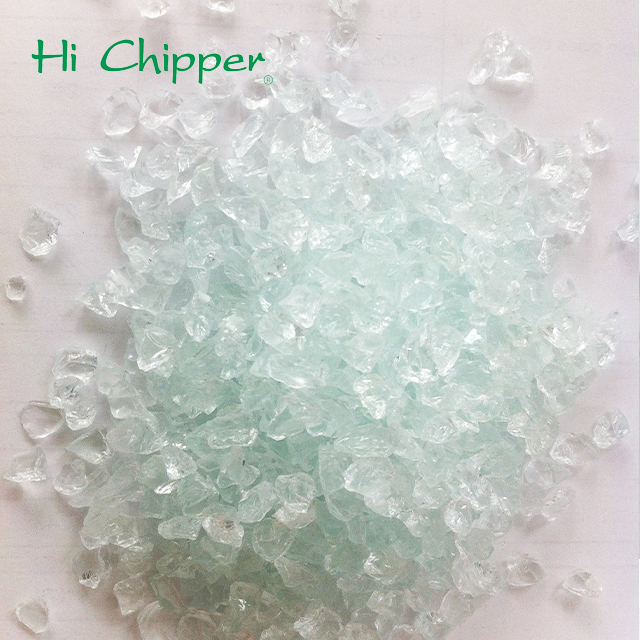
Recycled glass undergoes a rigorous manufacturing process for filtration use. Facilities sterilize the raw material to remove impurities. They crush and grade the glass to specific sizes. A critical step involves removing sharp edges. This ensures the media is safe to handle and prevents damage to the internal filter components. The resulting product provides exceptional hydraulic flow and particle retention. The grading process ensures that the glass particles are uniform, preventing the media from packing too tightly and restricting water flow.
Not all glass media performs identically. The market offers three distinct variations, each serving specific operational needs. Understanding these differences helps you select the right material for your specific hydraulic setup.
Crushed Glass Filter Media: This variant features a high surface area. It carries a slight negative electrostatic charge. This charge actively attracts microscopic particles like iron, manganese, and organic compounds out of the water. It acts like a magnet for fine dust.
Glass Beads: These offer a smooth, uniform spherical shape. They provide highly efficient flow dynamics and lower water resistance. They also prevent scaling inside the tank. The spherical shape ensures water passes through with minimal friction.
Activated Glass Media (AFM): This advanced option undergoes a chemical and thermal activation process. The activation grants it hydrophobic properties. It becomes completely resistant to biofilm colonization. It repels organic matter, keeping the filter bed exceptionally clean.
The filtration mechanics of glass allow for 5–9 micron clarity. Unlike sand, glass does not pack tightly together. The angular or spherical shapes maintain consistent spacing. This prevents channeling while still trapping microscopic debris. The electrostatic charge of crushed variants pulls fine dust out of suspension. You achieve superior clarity without restricting the system flow rates. The pump works less, yet the water looks visibly sharper. You will notice a distinct difference in the crispness of the water, especially at night when the pool lights are on, as the typical hazy scatter of light is eliminated.
Backwashing efficiency highlights a major difference between the two materials. Glass is less dense than sand. It fluidizes much better during a backwash cycle. When the water flow reverses, the glass bed lifts and separates easily. Trapped debris flushes out quickly. This process requires up to 25% less time compared to sand. Consequently, you conserve a massive amount of water. Shorter backwashes also mean you lose fewer pool chemicals and less heated water. If a standard sand backwash takes three minutes, a glass media backwash might only take two minutes to run completely clear in the sight glass.
Surface porosity directly impacts chemical demand. Silica sand is highly porous. Bacteria easily attach to it and form biofilm. Glass is non-porous. Bacteria cannot grip the smooth surface. Because glass cannot host biofilm, chloramine formation drops significantly. Chloramines cause the strong chemical odor often associated with indoor pools. By eliminating the biological load inside the filter, your overall sanitizer consumption decreases. The chlorine remains in the pool to protect swimmers rather than fighting bacteria in the filter tank. You will find your free chlorine levels remain much more stable throughout the week.
Operational scale dictates which benefits matter most. In residential pools, low maintenance is the priority. Homeowners appreciate skipping weekly backwashes and enjoying clear water with less effort. In commercial, high-bather-load pools, hydraulic efficiency is critical. Large facilities require rapid turnover rates. The lower head pressure of glass allows commercial pumps to move water faster using less energy. Both scales benefit, but the mechanical advantages scale up significantly for larger volumes. A commercial facility turning over 100,000 gallons will see massive reductions in backwash wastewater.
Performance Metric | Traditional Silica Sand | Pool Glass Filter Media |
|---|---|---|
Micron Filtration Rating | 15 - 20 Microns | 5 - 9 Microns |
Expected Lifespan | 3 - 5 Years | 10+ Years |
Biofilm Resistance | Low (Highly Porous) | High (Non-porous surface) |
Backwash Water Usage | High (Longer fluidization time) | Low (Up to 25% less time) |
Channeling Risk | High (Prone to calcification) | Very Low (Maintains spacing) |
Electrostatic Properties | None | Negative charge attracts fine debris |
Some users experience a paradox after upgrading. Their pools become cloudy or harder to maintain immediately after switching to glass. This usually happens because highly efficient media exposes existing system flaws. It can also temporarily alter pool chemistry. Glass catches much finer debris than sand. If your water was already full of micro-contaminants, the new glass filter will clog rapidly during the first few days. You must backwash frequently until the baseline water quality improves. Do not assume the media is failing; it is simply pulling out the dirt that your old sand filter was leaving behind.
Switching media often exposes common mechanical failure points. Oversized pumps are a frequent issue. High pump velocity forces fine debris straight through the glass bed. The water moves too fast for the electrostatic charge to grab the dirt. Structural damage is another hidden problem. Cracked laterals or a damaged standpipe will leak fine glass media directly back into the pool. Finally, unresolved water chemistry causes headaches. High phosphates or metal saturation are highlighted, not solved, by a media change. You must balance the water chemistry independently of the filter upgrade. Check your pump's flow rate against the filter's maximum design flow rate to ensure compatibility.
You must follow the 20% weight rule during installation. Glass is lighter and less dense than sand. If your filter requires 300 pounds of sand, you cannot put 300 pounds of glass into it. You must use roughly 20% less glass by weight. In this example, you would use 240 pounds of glass. This leaves adequate freeboard space at the top of the tank. Without this empty space, the glass will flush out of the waste line during a backwash. Always check the manufacturer's specific gravity rating, but the 20% reduction is the standard industry rule of thumb for preventing media loss.
Proper installation guarantees long-term success. Follow these best practices for the transition:
Remove all old sand and deep clean the empty filter housing with a hose and wet vacuum.
Inspect the internal laterals and standpipe for hairline cracks, brittle plastic, or wear.
Fill the tank halfway with water to cushion the laterals before adding any heavy media.
Pour the media slowly, keeping the standpipe perfectly centered and covering the opening with tape to prevent media from falling inside.
Layer coarse grades at the bottom to cover the laterals, and fine grades at the top, if specified by the manufacturer.
Run an initial backwash and rinse cycle for at least three minutes to clear out any manufacturing dust before sending water back to the pool.
Upgrading your filtration system requires careful consideration of your specific operational needs. Glass media offers objectively superior technical performance and bio-resistance. It captures finer particles and keeps the filter housing free of bacterial buildup. However, the initial installation must be handled correctly to realize these benefits. Proper sizing, flow rate matching, and lateral inspection are non-negotiable steps for a successful transition.
Use this shortlisting decision matrix. Choose sand if you operate on a strict, immediate budget constraint. Sand is also appropriate if your filter housing is nearing the end of its lifespan and requires replacement soon. Choose glass if you prioritize long-term water clarity and want to minimize weekly maintenance. Glass is ideal for reducing environmental impact and operating a structurally sound filter tank.
Take these clear next steps to begin your upgrade:
Verify your specific filter manufacturer's media specifications and maximum flow rate limits.
Open your filter tank, remove the old media, and inspect the internal laterals for any signs of brittle plastic or wear.
Calculate the exact poundage required for your tank using the 20% volume-to-weight conversion rule.
Test your pool water for high phosphates or metals and balance the chemistry before making the switch.
A: Yes. You can use glass media in any standard sand filter tank. The internal mechanics are identical. You just need to adjust the total weight of the media you add, using about 20% less glass than the recommended sand weight to account for the density difference.
A: Sand typically requires replacement every 3 to 5 years as the grains become rounded and calcified. Glass media maintains its structural integrity and sharp edges for 10 years or more, significantly extending the replacement cycle and reducing maintenance labor.
A: Glass filters catch much finer debris. If your pool has existing micro-contaminants, the filter will clog quickly at first, requiring frequent backwashing. Additionally, an oversized pump might push water too fast, forcing debris through the glass bed without trapping it.
A: Both offer excellent filtration down to 5-9 microns. Crushed glass uses a slight electrostatic charge to attract dirt. Glass beads offer smoother flow dynamics and lower resistance, which is excellent for energy efficiency and preventing scale buildup inside the tank.
A: Standard crushed glass is washed and graded recycled glass. Activated glass undergoes a specific chemical and thermal process. This activation makes the glass hydrophobic and completely resistant to bacterial biofilm colonization, keeping the filter bed cleaner.
A: Glass is lighter and less dense than sand. You need to use 20% less glass by weight. If your filter calls for 100 pounds of sand, you only need 80 pounds of glass to achieve the correct volume and leave enough freeboard space for backwashing.
A: Yes. Because glass is non-porous, bacteria cannot easily form biofilm inside the filter bed. With less biological load hiding in the filter, your pool requires less chlorine to maintain safe sanitization levels, leaving more active chlorine in the pool water.
