
- All
- Product Name
- Product Keyword
- Product Model
- Product Summary
- Product Description
- Multi Field Search
Views: 0 Author: Site Editor Publish Time: 2026-07-03 Origin: Site


Architects and fabricators specify reflective aggregates in modern surfaces to achieve visual depth, light manipulation, and striking aesthetics. The core challenge lies in balancing this demand for high-shine finishes against the technical realities of using glass aggregates. You must address safety concerns regarding sharp edges, ensure binder compatibility, and guarantee long-term durability. When integrated correctly, these aggregates transform ordinary floors and worktops into dynamic, light-catching installations.
Specifiers, contractors, and fabricators face distinct hurdles when working with these materials. You have to mitigate laceration risks during fabrication and prevent post-installation chipping. Choosing the right suspension matrix is equally critical. Selecting an incompatible binder can lead to structural failures or chemical reactions that ruin the finish. We will break down how to evaluate, source, and implement crushed mirror glass in terrazzo flooring, engineered stone, and epoxy countertops to ensure safe, scalable, and high-performing results.
Safety and Processing: Raw crushed mirror poses significant laceration risks during fabrication and use; specifying tumbled or heavily processed glass is mandatory for tactile surfaces like countertops.
Binder Compatibility: Crushed mirror glass performs optimally in resin or epoxy systems; when used in cementitious terrazzo, specific chemical mitigations are required to prevent Alkali-Silica Reactions (ASR).
Aesthetic Yield: The aggregate's reflective backing requires precise gradation, suspension techniques, and careful grinding during pouring to ensure the mirror faces remain visible and intact after polishing.
Post-Installation Wear Risks: High-impact kitchen environments present a risk of micro-chipping, which can expose sharp edges. Proper sealing and aggregate-to-matrix ratios are critical to prevent tactile failures.
Cost vs. Value: While recycled mirror glass is cost-effective as a raw material, the labor-intensive grinding, polishing, and sealing phases significantly impact the total project cost.
A successful reflective surface installation requires uniform aggregate distribution, zero surface protrusions, high light reflectivity, and absolute tactile safety. Achieving this standard demands precise material selection and meticulous fabrication techniques. You must control how the aggregate settles, how it bonds with the matrix, and how it responds to the final polishing stages. Fabricators working on large-scale commercial floors or custom residential islands know that the margin for error is incredibly small. If the glass sinks too far into the resin, you lose the reflective yield. If it sits too high, the grinding process will rip the shards out, leaving a surface full of pinholes.
The silvered backing of a mirror interacts uniquely with ambient and directional lighting. Unlike standard clear aggregates that simply transmit light, the mirrored backing bounces light back through the transparent matrix. This creates an illusion of three-dimensional depth within a flat plane. The angle of the suspended shards dictates how light scatters across the room. When you walk across a well-executed terrazzo floor, the light should catch different shards at different angles, creating a dynamic, shifting shimmer rather than a static glare.
Comparing visual depth reveals stark differences between standard Terrazzo Glass and mirrored aggregates. Clear glass offers subtle translucency. Mirrored shards deliver sharp, high-contrast flashes. The base matrix color heavily influences the final reflective yield. Dark binders absorb ambient light, making the silver flashes pop aggressively. Light or white binders create a softer, more integrated shimmer that blends with the surrounding architecture. You have to consider the lighting design of the room before finalizing the matrix color. High-intensity spotlights will cause dark-matrix floors to sparkle intensely, while diffuse natural light pairs better with lighter binders.
Contractors utilize these reflective aggregates across various structural and decorative applications. Each use case demands specific processing and installation techniques. You cannot treat a poured-in-place floor the same way you treat a precast countertop.
Flooring: Large-scale resin terrazzo floor systems rely on reflective aggregates for commercial spaces. Lobbies, retail centers, and airports use them to brighten expansive areas and hide scuff marks. The installation requires heavy planetary grinders and massive volumes of material.
Countertops and Solid Surfaces: Custom epoxy pours frequently incorporate these materials. Kitchen islands, worktops, and bathroom vanities benefit from the high-end aesthetic. These require meticulous hand-troweling and edge detailing.
Engineered Stone and Acrylic-Molded Products: Industrial manufacturers integrate these shards into quartz-like slabs. Prefabricated terrazzo tiles also utilize them for consistent, mass-produced visual appeal under controlled factory conditions.
Loose Decorative Use: Architectural applications extend beyond solid matrices. You will often see these materials used as vase fillers, in fire pits, or for loose landscaping accents where binders are entirely absent.
Modern design trends favor complex textures. Fabricators frequently combine recycled mirror shards with natural marble chips, granite, or broken ceramic tiles. This creates a striking contrast between the matte, opaque nature of stone and the sharp reflectivity of the glass. The resulting matrix offers a diverse tactile and visual experience. You might mix a size #1 white marble with a size #2 mirror aggregate to create a floor that looks primarily like classic stone but flashes under direct light.
Mixing aggregates of varying hardness levels introduces structural challenges. Marble is relatively soft, while glass is hard and brittle. During the grinding phase, the diamond tooling will cut through the softer marble much faster than the glass. You must adjust your grinding pressure and tooling selection to prevent the harder aggregates from sitting proud of the surface or dislodging entirely. If you run aggressive metal-bond diamonds too fast, you will gouge the marble while barely scratching the glass, resulting in a wavy, uneven floor.
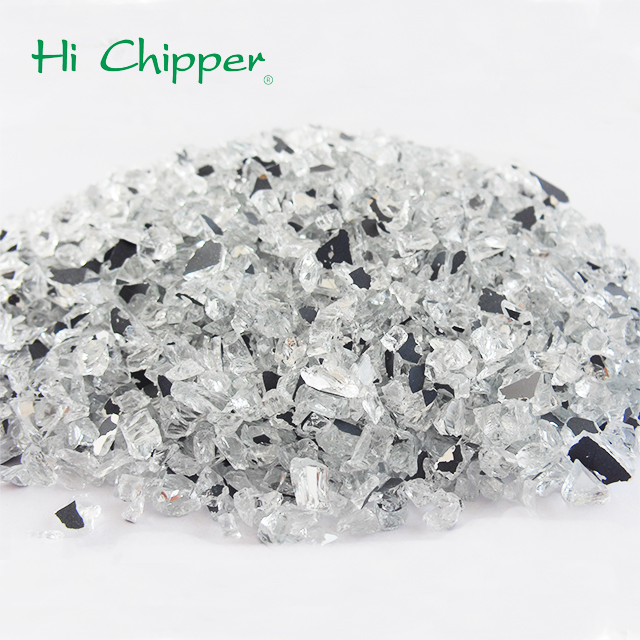
Evaluating the primary matrices used to suspend reflective aggregates dictates the entire trajectory of the installation. You must choose between resin systems and traditional cementitious binders based on the specific application, environment, and fabricator expertise. Making the wrong choice here guarantees a tear-out.
Epoxy remains the industry standard for glass aggregates. It offers excellent flexibility, superior adhesion, crack resistance, and optical clarity. The resin binds tightly to the smooth, non-porous surface of the glass, preventing moisture intrusion and structural delamination. The clear nature of many epoxies also maximizes the reflective yield of the embedded shards. When you trowel an epoxy matrix, the resin coats the glass completely, locking it into place once cured.
Managing aggregate suspension requires careful timing. Heavy glass tends to sink to the bottom of the epoxy pour before curing. Fabricators must monitor the viscosity of the resin. Pouring in thin layers or waiting for the epoxy to partially set before broadcasting the aggregate ensures even distribution. Cure times and thermal management are critical when pouring thick countertop slabs with dense aggregate loads. Excessive heat generation during the exothermic curing process can cause the slab to warp or crack. You have to control the ambient room temperature and use slow-cure hardeners for deep pours.
Using glass in cementitious terrazzo requires advanced chemical knowledge. The primary threat is the Alkali-Silica Reaction (ASR). The high alkalinity of standard Portland cement reacts violently with the amorphous silica in the glass. This reaction forms an expansive gel that absorbs moisture, swells, and causes map-cracking. Left unchecked, ASR will destroy the structural integrity of the floor or slab. You will see spiderweb cracks forming within months of the pour.
Mitigation strategies are mandatory. You must use pozzolans like metakaolin or fly ash to consume the excess calcium hydroxide in the cement. Lithium-based admixtures can also suppress the expansive reaction. Alternatively, specifying specialized low-alkali cements significantly reduces the risk. Weight considerations also matter. High-volume glass aggregates alter the structural load-bearing limits of the concrete, requiring careful engineering for suspended slabs. You cannot simply swap stone for glass in a concrete mix design without adjusting the chemical admixtures.
Specifying the correct physical properties of the aggregate prevents installation failures and ensures user safety. You must evaluate sizing, edge processing, and finishing requirements before pouring the matrix. Ordering the wrong type of glass will shut down a job site immediately.
Standard sizing charts dictate the visual texture of the finished surface. Sizes typically range from fine dust (Size #0) to large, chunky shards (Size #2 or larger). The chosen size directly impacts the final finish and the required polishing depth. Larger shards require deeper grinding to expose the maximum surface area of the mirror backing. If you use massive chunks of glass, you have to grind away a quarter-inch of epoxy just to hit the aggregate.
A blended gradation yields superior results. Mixing fine and coarse Crushed Mirror creates a dense, tightly packed matrix. The finer particles fill the void spaces between the larger shards. This increases structural integrity, reduces the required volume of expensive resin, and delivers a higher visual density of reflective points. A well-graded mix trowels smoother and grinds flatter.
Aggregate Size | Typical Application | Visual Effect |
|---|---|---|
Size #0 (Fine) | Grout lines, void filling, subtle shimmer | Consistent, granular sparkle |
Size #1 (Medium) | Standard terrazzo floors, residential countertops | Balanced reflection, even distribution |
Size #2 (Large) | Feature walls, heavy commercial epoxy slabs | Bold, high-contrast flashes of light |
Safety is the paramount concern when working with these materials. Raw recycled glass shards possess razor-sharp edges. They can cause severe cuts during fabrication and present a massive liability if poorly finished in a post-installation environment. Specifying the correct edge profile is non-negotiable for tactile surfaces. You do not want a client running their hand across a kitchen island and catching a raw glass edge.
The mechanical tumbling process dulls these sharp edges. Industrial tumblers agitate the shards, rounding off the dangerous points without destroying the reflective backing or stripping the silver coating. Tumbled glass is mandatory for countertops, vanities, and any surface subject to human contact. Untumbled glass should be strictly limited to deep-pour encapsulations where the aggregate remains fully submerged, and grinding will never expose the raw edges.
Exposing the aggregate requires a multi-step diamond grinding process. Fabricators start with coarse metal-bond diamonds to cut through the top layer of resin or cement. They progressively move through finer resin-bond grits to polish the surface. You must execute this process carefully to avoid dislodging the glass from the matrix. Running a 30-grit metal diamond too fast will shatter the glass at the surface level.
The risk of pull-out is high. If the tooling speed is too aggressive or the bond hardness is incorrect, the diamonds will rip the glass shards out of the binder rather than cutting them flat. You must adjust tooling speeds and select the appropriate bond hardness for the specific matrix. Grouting and pinholing are inevitable steps. Fabricators must apply a skim coat of resin or specialized grout to fill the voids left by dislodged glass or trapped air pockets before executing the final polish. You typically grout after the 120-grit stage to ensure the pores are open and ready to accept the filler.
Assessing how the material holds up over decades of use dictates its suitability for commercial and residential applications. You must evaluate wear resistance, tactile safety, and maintenance requirements. A floor that looks great on day one but scratches heavily by month six is a failure.
Glass registers around 5.5 on the Mohs hardness scale. This makes it harder than typical marble aggregates but softer than quartz or granite. It provides adequate wear resistance for most foot traffic and countertop use. However, it is susceptible to scratching from harder materials like ceramic knives or heavy steel pans. You have to educate clients on proper surface protection.
Differential wear presents a long-term challenge. Softer epoxy matrices wear differently than harder glass aggregates under heavy foot traffic. Over time, the resin may erode slightly faster than the glass, leaving the shards microscopically proud of the surface. This alters the light reflection and can make the floor harder to clean. Regular maintenance and re-polishing mitigate this issue. Running a high-speed burnisher with a diamond-impregnated pad every few months keeps the surface uniform.
User complaints regarding glass countertops often center on tactile safety. Micro-cracks or chipped aggregate edges can cause physical cuts. This typically occurs when heavy objects strike the surface, fracturing the embedded glass. Kitchen environments, with heavy pots and dropped utensils, are particularly high-risk zones. A cast-iron skillet dropped on a glass-heavy epoxy edge will cause spalling.
Preventing delamination and exposure of sharp shards requires strategic design. High-impact zones like edges, sink cutouts, and cooktop surrounds need special attention. You must ensure a high resin-to-glass ratio in these vulnerable areas. Implementing radius edge profiles rather than sharp 90-degree corners significantly mitigates chipping hazards. A rounded edge deflects impact energy, protecting both the matrix and the embedded glass. Fabricators should use a router with a diamond profile wheel to shape these edges perfectly.
Maintaining these surfaces requires strict adherence to chemical protocols. You must avoid highly acidic cleaners. Acid can degrade the epoxy matrix over time. More importantly, if the acid penetrates a micro-fissure, it will tarnish and destroy the exposed silver mirror backing, leaving a dull, black void where a reflective flash used to be. Stick to pH-neutral cleaners designed specifically for stone and terrazzo.
Long-term sealing protocols are essential for both commercial terrazzo floors and residential worktops. Penetrating sealers protect cementitious matrices from staining. Surface waxes or specialized epoxy polishes maintain the high gloss finish and provide a sacrificial wear layer. Re-polishing intervals depend heavily on traffic volume, but commercial floors typically require a light diamond hone and re-seal every few years to maintain optimal reflectivity.
Specifying this material involves distinct economic realities. You must weigh the low cost of the raw aggregate against the intense labor required for proper installation. The material budget is often dwarfed by the labor budget.
Utilizing post-consumer or post-industrial recycled mirror glass offers significant sustainability benefits. It diverts waste from landfills and often contributes to LEED point calculations for commercial building projects. This makes it highly attractive for eco-conscious architecture. You can pitch this to clients looking to hit specific environmental certification tiers.
Quality control is the primary hurdle when sourcing recycled batches. You must ensure the aggregate is entirely free of contaminants. Plastics, metals, paper labels, or organic debris mixed into the batch will compromise binder adhesion. A single piece of organic material can create a weak point that leads to a surface spall. Always source from reputable processors who wash and magnetically screen their aggregates. Inspect the bags upon delivery before mixing them into the resin.
The raw material itself is relatively inexpensive. However, the specialized labor required for mixing, pouring, grinding, and polishing drives the total project cost upward. Achieving a flawless, pinhole-free finish demands highly skilled technicians and expensive diamond tooling. You are paying for the expertise required to grind the surface without destroying the glass.
Scalability heavily influences the final price. The cost-per-square-foot decreases significantly in large commercial flooring projects. Mobilizing heavy planetary grinders for a 10,000-square-foot lobby is highly efficient. Conversely, custom residential countertops require meticulous hand-polishing and complex edge detailing. This makes small-scale applications significantly more expensive per square foot. You have to factor in the setup and teardown time for wet-polishing equipment in a residential setting.
Implement a strict specification process that mandates tumbled glass for all tactile surfaces to eliminate post-installation laceration risks.
Select high-clarity epoxy resins for countertop applications to ensure optimal aggregate suspension and maximum light reflectivity.
Verify that the contractor is actively utilizing pozzolans or lithium admixtures to neutralize Alkali-Silica Reactions if your project requires a cementitious matrix.
Require your fabrication team to produce a physical mockup using the exact aggregate gradation and binder to confirm the grinding process will not cause excessive pull-out.
A: No. Standard broken mirrors have razor-sharp edges that will cause severe cuts during mixing and polishing. You must use mechanically tumbled mirror glass designed specifically for aggregate use to ensure safety.
A: This is likely due to an Alkali-Silica Reaction (ASR). The high alkalinity of the cement reacts with the silica in the glass, creating an expansive gel that causes micro-cracking and a cloudy appearance.
A: You must manage the epoxy viscosity. Pour the resin in thinner layers, or allow the epoxy to partially set and thicken before broadcasting the heavy glass aggregate across the surface.
A: Yes. Harsh acidic cleaners can degrade the epoxy matrix over time. If the acid reaches the silver backing of the mirror shards, it will tarnish the reflective coating and ruin the aesthetic.
A: While epoxy itself is non-porous, applying a sacrificial wax or specialized polish provides a wear layer that protects the surface from micro-scratches and maintains the high-gloss finish under heavy foot traffic.
A: Start with a 30-grit or 40-grit metal bond diamond to cut through the top layer of the binder. Proceed carefully to avoid shattering the glass, then transition to resin bond pads for the final polish.
