
- All
- Product Name
- Product Keyword
- Product Model
- Product Summary
- Product Description
- Multi Field Search
Views: 0 Author: Site Editor Publish Time: 2026-10-14 Origin: Site


The integration of eco-friendly ambient lighting into modern landscaping has seen a massive surge in recent years. Homeowners and commercial contractors are actively seeking sustainable ways to illuminate pathways without relying on grid electricity. Global landscaping trends indicate a massive shift toward zero-emission hardscaping. Municipalities and property developers are actively seeking ways to mitigate light pollution while maintaining pedestrian safety at night. Photoluminescent aggregates fit this demand perfectly. They absorb daylight and emit a soft glow, effectively eliminating the need for complex electrical wiring or trenching.
However, market reports show a growing consumer frustration with fast-fading novelty plastics. This pushes the industry toward commercial-grade glass solutions that promise genuine longevity. Buyers often hesitate to invest time and money into glowing materials, fearing they will fade to black within an hour or degrade after a single summer of sun exposure. High-quality glass alternatives serve as the premium, permanent solution to this problem. Unlike their cheap plastic counterparts, these commercial-grade materials are engineered for consistent, long-lasting radiance.
If you are planning an outdoor project, understanding the exact performance metrics of these materials is crucial. This comprehensive guide will examine exactly how long they glow per night, their overall structural lifespan, the physics behind their illumination, and practical steps to maximize their brightness.
Nightly Duration: Premium glass aggregates typically stay lit for 8 to 12 hours after receiving a full day of sunlight.
Total Lifespan: Because glass is inert and immune to UV degradation, these stones easily last 20+ years without losing their luminescent properties.
The Science: Modern aggregates utilize Strontium Aluminate. This advanced compound charges faster and glows up to 10 times longer than older zinc-based formulas.
Best Colors: Yellow-green and aqua-blue are scientifically proven to offer the brightest initial glow and the longest-lasting afterglow.
Material Superiority: Solid glass universally outperforms plastic resin in structural durability, weather resistance, and long-term aesthetic appeal.
For project planners and landscape architects, evaluating the performance of photoluminescent materials means distinguishing between two distinct metrics. You must consider the nightly glow duration alongside the physical lifespan of the product itself.
Under optimal charging conditions, high-quality glass aggregates emit light for 8 to 12 hours. However, it is important to understand that the light output is not a flat line of uniform brightness. Instead, the illumination follows a specific decay curve. Immediately after sunset, the material emits an intense radiance for the first two hours. Following this initial peak phase, the brightness gradually tapers off into a softer ambient afterglow. Is it still visible? Absolutely. The dark-adjusted human eye can clearly see this softer glow until dawn in pitch-black environments.
A frequent misconception is that these materials eventually run out of energy like a standard battery. In reality, the active compounds do not undergo chemical degradation during the charge and discharge cycle. As long as the physical structure remains intact and free of surface debris, premium glow stones will recharge infinitely. They easily exceed a 20-year lifespan in permanent concrete installations.
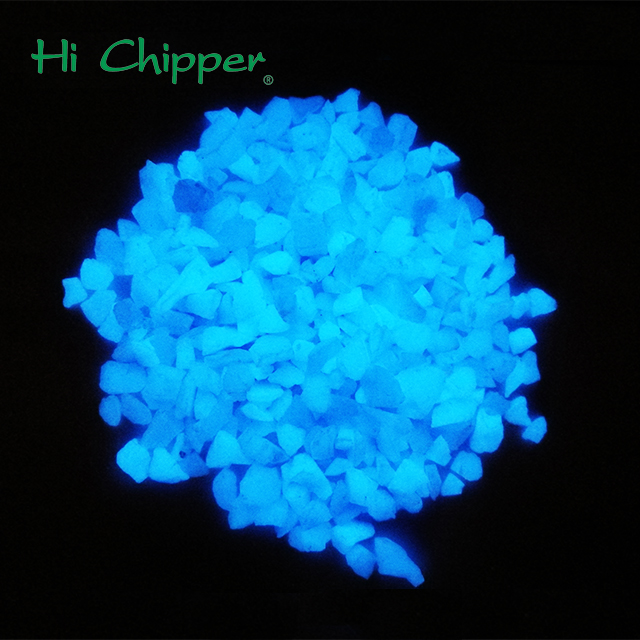
To understand why premium materials perform so exceptionally well, we must look at the underlying science. The glowing effect is not the result of a temporary chemical reaction. It is a repeatable physical phenomenon known as photoluminescence.
During the day, the active luminescent compounds within the glass matrix act like solar sponges. They absorb photons from ultraviolet rays. This absorbed energy excites the electrons within the compound, pushing them into a higher energy state. When the external light source disappears, these electrons slowly return to their normal resting baseline. As they drop back down, they release that stored energy in the form of visible light.
The duration and intensity of the phosphorescence depend entirely on the specific chemical compound utilized during manufacturing. Historically, cheap novelty items relied on Zinc Sulfide. While inexpensive to produce, Zinc Sulfide has a very rapid discharge rate. It typically loses its illumination within 45 minutes. In contrast, modern luminous pebbles utilize Strontium Aluminate doped with rare-earth elements. This advanced formula absorbs energy significantly faster and holds onto it much longer. Verifying the presence of Strontium Aluminate is the single most critical step for ensuring long-term project success.
Even the highest quality materials are subject to environmental variables. Understanding these key factors will help you set realistic expectations and optimize your landscape design for maximum brilliance.
Direct, unshaded sunlight is the most powerful charging source available. It fully saturates the luminescent matrix in just 30 minutes. Furthermore, the stones will still charge on overcast days because UV rays easily penetrate cloud cover. It simply takes slightly longer to reach maximum capacity.
The laws of physics dictate that different colors carry different energy levels. Yellow-Green and Aqua Blue are universally the most efficient wavelengths. These specific colors align optimally with human scotopic vision, making them appear the brightest in the dark. Alternatively, colors like deep purple or red require a different chemical doping process that inherently stores less energy. A purple stone may naturally fade after 5 hours compared to the 12-hour lifespan of a green stone.
The substrate on which you place your glow chips plays a surprisingly large role in perceived brightness. Glass is translucent. If you embed the chips in dark asphalt, the background absorbs a portion of the light. Conversely, installing them on a white or light-gray concrete background acts as a reflector. This bounces the light back upward to the viewer and amplifies the overall radiance.
When sourcing materials for a commercial build or residential patio, buyers frequently face a choice between glass and plastic resin. While plastic presents a lower upfront cost, glass is universally recognized by engineers and contractors as the superior material for permanent installations.
Feature | Commercial-Grade Glass | Plastic Resin |
|---|---|---|
Lifespan | 20+ Years | 1 to 2 Years |
UV Resistance | Immune. Remains crystal clear. | Poor. Turns yellow and cloudy over time. |
Thermal Stability | Excellent. Will not crack in freezing weather. | High expansion rate. Pops out of concrete. |
Eco-Friendliness | Inert and non-toxic. Safe for aquatic life. | Leaches microplastics into surrounding soil. |
Selecting the correct product specifications is vital for achieving your desired aesthetic. Instead of guessing, use these proven engineering guidelines based on real-world manufacturing parameters.
Select the Right Size for Your Application:
1-3mm and 3-6mm: These finer sizes are perfect for pool plastering, epoxy resin art, and terrazzo floors. They provide a dense, seamless starry-night effect without creating a tripping hazard.
6-9mm and 9-12mm: Opt for these larger sizes when seeding exposed aggregate concrete driveways or garden pathways. Larger stones boast a greater surface area, allowing them to absorb more light and emit a bolder, more visible glow outdoors.
Select the Right Color Profile:
Yellow-Green: Choose this for maximum peak brightness and the longest possible decay curve. It is the industry standard for safety pathways.
Sky Blue and Aqua Blue: These colors offer a highly modern, aquatic aesthetic. They are exceptionally popular for swimming pool surrounds and high-end patio designs.
Strategic placement is the key to maximizing outdoor performance. Before permanently installing the materials in concrete, take a day to map out the shadow lines cast by fences and large trees. Ensure the installation area receives direct, unfiltered sunlight during peak afternoon hours. Avoid placing the materials under heavy bushes that block UV rays from reaching the ground.
Because the material relies on light penetration to function, keeping the surface clean is vital. Over time, outdoor installations can become coated in a layer of mud or green algae. This creates a physical barrier that prevents UV light from charging the luminescent matrix. If you notice your driveway dimming after a long winter, a simple spring power wash will instantly strip away the grime. This restores their original charging capacity and brilliant glow.
The exceptional durability of glass aggregates makes them highly versatile across residential, commercial, and artistic applications.
Driveways and Pathways: Contractors create self-illuminating pathways that guide vehicles safely at night without expensive trenching.
Pool Decks and Patios: Embedding these aggregates into pool plaster creates a mesmerizing aesthetic that enhances nighttime swimming safety.
Aquariums and Fish Tanks: Solid glow in the dark glass is completely inert. It provides a non-toxic glowing environment for fish, absorbing light from the tank's LED hood during the day.
Resin Art and DIY Crafts: Artisans use finer sizes as a base layer in epoxy river tables and bespoke planters, adding a unique luminescent dimension to their artwork.
High-quality glass aggregates are a remarkable engineering innovation. They are capable of staying lit for 8 to 12 hours a night and easily last for over 20 years. By harnessing the power of photoluminescence and premium Strontium Aluminate, these materials offer a highly sustainable, off-grid lighting option that transforms ordinary hardscaping into captivating nighttime landscapes.
While solid glass options require a slightly higher upfront investment compared to cheap plastics, their absolute immunity to UV degradation and stunning aesthetic make them the superior choice. Stop wasting budget on fast-fading novelty items. If you are ready to elevate your commercial hardscaping or residential project, choosing the right manufacturer is critical. Visit Hi Chipper Glass Factory to explore premium, commercial-grade options tailored to your specific size and color requirements.
No, they are completely off-grid and require zero electrical wiring. They rely entirely on the physical process of photoluminescence, absorbing ambient UV light during the day and emitting it slowly at night as a natural glow.
Yes, they are exceptionally safe. Because the active glowing compound is encased entirely within a solid, inert glass matrix, they are non-toxic, will not leach chemicals, and are perfectly safe for aquariums, koi ponds, and pet-friendly garden beds.
Yes. Solid commercial-grade glass has an incredibly low coefficient of thermal expansion. It will not warp, crack, or pop out of concrete installations during harsh freeze-thaw cycles, making it ideal for cold climates.
For a standard exposed aggregate concrete installation, the recommended seeding rate is typically 10 to 15 pounds of glass per 100 square feet. This provides a balanced, visually appealing distribution without overwhelming the concrete mix.
They are likely not receiving enough direct UV light during the day to achieve a full charge. Alternatively, there may be too much ambient light pollution in your yard, such as a bright streetlamp, washing out the visible ambient glow. Ensure they charge in direct sunlight and are viewed in total darkness.
