
- All
- Product Name
- Product Keyword
- Product Model
- Product Summary
- Product Description
- Multi Field Search
Views: 0 Author: Site Editor Publish Time: 2026-09-04 Origin: Site


Tired of replacing faded wood mulch every year? Traditional organic ground covers degrade rapidly under harsh weather conditions. They saddle your business with recurring labor and replacement costs. In this guide, I will show you how durable, eco-friendly landscape glass completely resolves these ongoing maintenance headaches. It offers a permanent solution that elevates the aesthetic of any commercial project.
Let us look at current industry trends. Commercial property managers and landscape architects face strict water conservation mandates and rising maintenance wages. Recent market data shows a massive shift toward climate-resilient hardscaping. Urban heat islands are intensifying. Droughts are forcing municipalities to ban moisture-dependent organic mulches. As an engineer evaluating site materials, I see xeriscaping no longer as a niche trend but a baseline requirement. Inert, reflective materials meet these new environmental standards while maintaining high-end aesthetic appeal.
Traditional wood bark decomposes. It loses visual appeal under ultraviolet exposure. You have to replenish it annually. I have seen organic mulch rot against building foundations too many times. It holds water. It breeds pests. It degrades.
Inorganic alternatives change the game. As an inert, non-porous material, garden glass offers unmatched physical durability. It withstands heavy foot traffic, severe weather fluctuations, and intense UV rays without breaking down. It will not splinter or fade. Beyond structural resilience, the eco-friendly advantage is massive. Commercial-grade glass aggregates are manufactured from post-consumer or post-industrial recycled materials. Integrating these elements into corporate campuses or municipal parks directly contributes to achieving Leadership in Energy and Environmental Design certification points under the Materials and Resources category.
Ultimately, this shift is driven by the broader transition toward zero-maintenance infrastructure. By replacing temporary organic layers with permanent aggregates, facilities eliminate seasonal re-mulching, chemical weed treatments, and pest control.
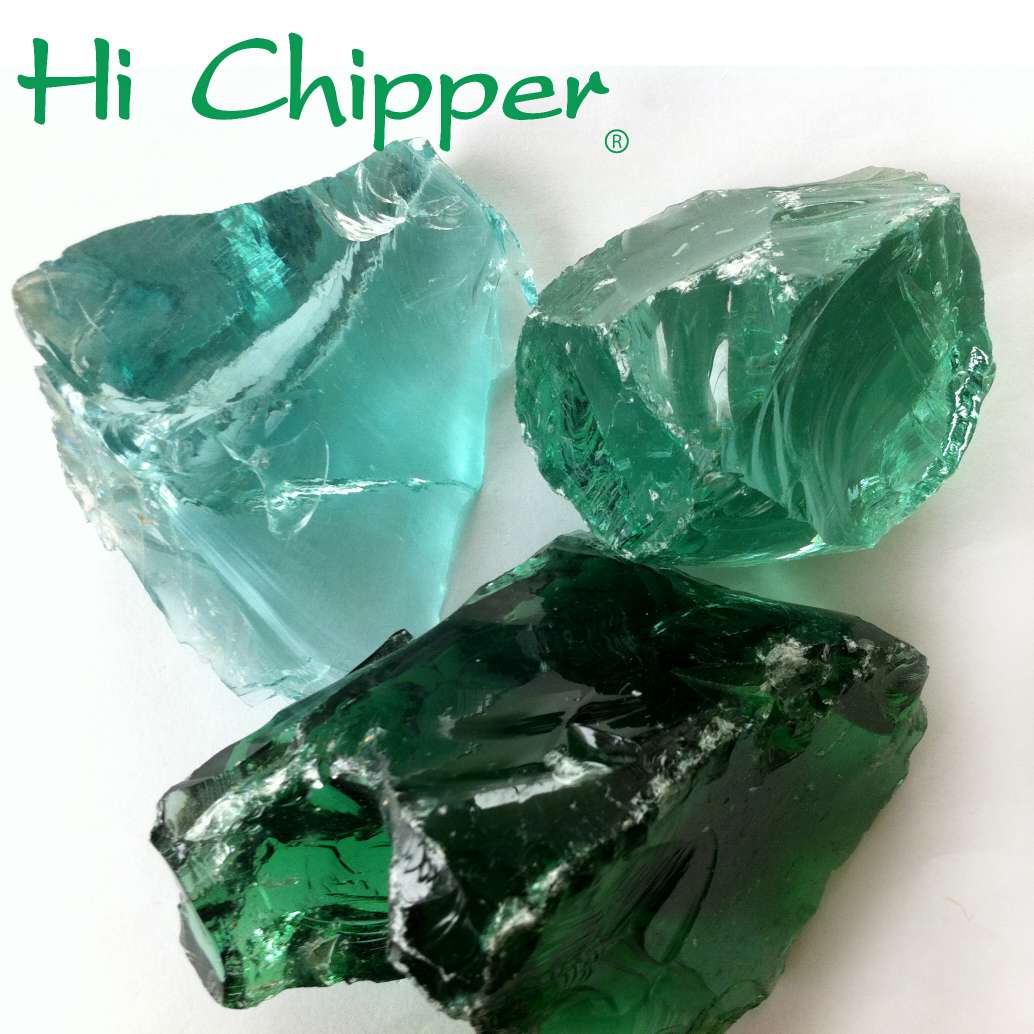
The physical dimensions of the aggregate dictate both functional performance and visual texture. Selecting the appropriate size ensures the material stays in place and serves its architectural purpose. I always tell contractors to match the aggregate size to the site's foot traffic and drainage needs.
Fine aggregate behaves like coarse sand or small pea gravel. Its minimal void space allows it to compact efficiently. This provides a smooth, stable surface.
Best Uses: This size is optimal for filling joints between large paving stones, creating intricate mosaic ground designs, and surfacing pedestrian pathways.
Pros: It settles tightly. This reduces the risk of pieces being kicked out of shallow beds. It effectively suppresses small weed growth when paired with a quality barrier.
This is the industry standard for general commercial landscaping. It strikes a precise balance between visible texture and uniform ground coverage.
Best Uses: Medium sizes work perfectly for expansive ground cover areas, commercial planter beds, tree wells, and large-scale outdoor fire pits.
Pros: It provides enough weight to resist displacement from leaf blowers and heavy rain. It still offers a dense layer to completely hide the underlying soil or landscape fabric. You can easily find premium decorative glass rocks in these exact specifications for your site.
Large chunks serve primarily as structural and architectural elements rather than standard ground cover. Their size prevents tight compaction. Water and air flow freely through the voids.
Best Uses: Chunky glass is the required specification for filling gabion walls, constructing high-flow water features, and creating bold standalone architectural focal points.
Pros: The substantial mass ensures the material will not wash away in turbulent water currents. The larger surface area captures and refracts ambient light beautifully. This makes it ideal for illuminated installations.
Color selection extends far beyond mere aesthetics. It is a strategic tool for reinforcing brand identity and integrating the built environment with nature. The pigment is fundamentally baked into the material during the melting process. It is not applied as a surface coating. Therefore, premium colored glass rocks remain permanently vibrant.
Cool tones naturally evoke a sense of calm and cleanliness. They often mimic the reflective properties of water and sky.
Vibe: Calming, refreshing, and distinctly modern.
Applications: Luxury hotels and spa retreats rely heavily on these colors. They are the standard choice for dry riverbed designs in drought-prone regions. They provide the illusion of flowing water without the irrigation costs.
Warm tones are inherently high-contrast. They draw the human eye immediately, projecting energy across a landscape.
Vibe: Energetic, bold, and inviting.
Applications: Amber hues are the premier choice for commercial fire features. They amplify the visual impact of flames. Retail storefronts place them strategically to create high-visibility focal points that capture pedestrian attention.
For projects requiring understated elegance, neutral tones provide rich texture without overwhelming the architecture.
Vibe: Sophisticated, minimalist, and highly versatile.
Applications: Clear and reflective aggregates frequently pair with sub-surface LED lighting to create glowing pedestrian pathways at night. Many suppliers offer custom blending, allowing corporations to match their ground cover to official brand guidelines.
Accurate material calculation prevents costly delays caused by under-ordering or budget overruns from excess material. Estimating the exact volume of landscaping glass aggregate requires a basic understanding of square footage and desired depth.
The Standard Rule of Thumb
For standard ground cover and effective weed suppression, landscape architects universally recommend a minimum installation depth of 1.5 to 2 inches. Depths shallower than 1.5 inches risk exposing the underlying fabric over time. Depths exceeding 2 inches offer diminishing returns for standard visual applications.
The Calculation Formula
To determine the exact weight required, follow this standardized engineering methodology. First, calculate the square footage by multiplying the length of the installation area by its width. Second, confirm the 2-inch standard depth for commercial beds. Finally, apply the conversion metric. On average, it requires approximately 7 to 8 pounds of glass per square foot to achieve a 2-inch depth.
Size Impact on Coverage
The physical size of the pieces affects the overall density. Larger chunks possess more empty air space between the rocks. This slightly reduces the total weight required per cubic foot compared to fine aggregates that settle densely together.
Project Area Sq. Ft. | Depth Required | Estimated Glass Required Lbs | Recommended Glass Size |
|---|---|---|---|
50 sq. ft. | 2 inches | 350 - 400 lbs | 10-20mm Medium |
100 sq. ft. | 2 inches | 700 - 800 lbs | 10-20mm Medium |
500 sq. ft. | 2 inches | 3,500 - 4,000 lbs | 10-20mm Medium |
1,000 sq. ft. | 2 inches | 7,000 - 8,000 lbs | 10-20mm Medium |
Always consult with your specific material supplier. Exact weight-to-volume ratios can vary slightly based on the specific gravity of the recycled batch.
The structural versatility of tempered and tumbled glass allows it to be deployed across a wide spectrum of environments. Below are the most effective applications yielding high visual and operational returns.
In high-traffic environments like indoor shopping concourses and outdoor corporate plazas, exposed soil is problematic. It creates dust. It spills onto walkways. It requires constant sweeping. Replacing dirt with glass aggregates creates a clean, contemporary aesthetic. It locks moisture into the soil while completely eliminating dirt tracking.
Gabion architecture relies on wire cages traditionally filled with river rock. We modernize this by substituting stone with large chunky glass. When utilized in retaining walls, this provides a striking industrial aesthetic. Because the material transmits light, these gabion structures integrate perfectly with internal LED lighting systems. They transform standard retaining walls into glowing architectural monoliths at night.
Tempered variants are non-combustible. They do not emit toxic fumes when exposed to heat. This makes them the safest medium for restaurant patio fire pits. In commercial water fountains, the vibrant colors remain pristine underwater without promoting the rapid algae growth often associated with porous natural stones.
The long-term success of any hardscaping project relies heavily on the quality of the installation. Failing to prepare the site properly leads to material migration and weed infiltration. To protect your investment, specific site preparation and containment protocols must be strictly followed. I always enforce these rules on my job sites.
The foundation of a successful installation begins with proper excavation and grading. Inorganic materials require a stable, permanent base. Without proper mechanical compaction, any ground cover will inevitably pool water or shift.
First, excavate the designated area to a depth of 1.5 to 2 inches. Remove all existing organic matter, roots, and topsoil debris. Leaving organic matter beneath the surface causes uneven settling as it decays. Level and grade the subgrade. Ensure a minimum grade slope of 1 to 2 percent directed away from building structures. Finally, compact the soil using a mechanical plate compactor. This prevents the ground cover from sinking into the earth during heavy rainfall.
One of the most common points of failure in commercial hardscaping is omitting commercial-grade weed barriers and rigid edging. You are installing a permanent feature. The containment systems must also be permanent.
Never install inorganic aggregates directly over bare soil. A heavy-duty permeable geotextile fabric is mandatory. This barrier suppresses weed growth by blocking sunlight. It acts as a stabilizing separation layer, preventing heavy material from migrating downward into the muddy subgrade. Overlap the seams by at least six inches. Secure them with steel landscape staples every three feet.
Inorganic aggregates do not interlock the way shredded wood does. They require physical boundaries to remain contained. Heavy-duty aluminum or Corten steel edging is highly recommended for modern corporate plazas. It offers a rust-proof, clean-lined boundary.
During the manufacturing, tumbling, and shipping processes, the aggregate naturally generates a fine layer of silica dust. When the material first arrives and is distributed out of bulk bags, it may appear dull. This is normal. To reveal the true brilliance, a post-installation wash is required. Once evenly spread and leveled using steel rakes, thoroughly rinse the entire area with a high-pressure water hose. The water flushes residual dust down through the permeable weed barrier, instantly maximizing the natural sparkle.
When facility managers evaluate ground cover options, the initial purchase order often dictates the decision. However, evaluating the Total Cost of Ownership over a multi-year horizon provides a much more accurate financial picture.
Sourcing premium materials requires a higher initial capital expenditure compared to shredded pine mulch or standard river rock. Traditional organic mulch is inexpensive to produce and transport. Manufacturing inorganic alternatives involves recycling, cleaning, crushing, tumbling, and tempering processes. This inherently drives up the initial price point per square foot.
The true financial advantage becomes evident when projecting maintenance budgets over a 5 to 10 year period. Organic materials are temporary. They decompose, blow away in high winds, and lose their color within a single season. Commercial properties must budget for annual material replacement, recurring labor costs, and chemical treatments to deter termites.
By transitioning to a permanent solution like glass mulch, recurring operational expenses drop to zero. It will never rot. It never requires top-dressing. It never attracts wood-boring pests.
Expense Category | Traditional Wood Mulch 10 Years | Inorganic Glass Alternative 10 Years |
|---|---|---|
Initial Material Cost | Low | High |
Initial Installation Labor | Low | Moderate Requires precise site prep |
Annual Replacement Material | Required 10x over 10 years | $0 Zero replacement needed |
Annual Top-Dressing Labor | Required 10x over 10 years | $0 Zero re-application needed |
Pest and Fungal Control Chemicals | Moderate to High | $0 Inorganic, does not attract pests |
Total 10-Year TCO | Substantially Higher | Significantly Lower |
Beyond direct financial savings, utilizing recycled aggregates contributes to green building certifications. This increases commercial property values and attracts environmentally conscious corporate tenants.
No, they are not dangerous. High-quality products intended for commercial landscaping undergo a rigorous mechanical tumbling process during manufacturing. This extensive tumbling dulls and smooths the sharp edges. It results in a product that is safe to handle without gloves and completely safe for pedestrian foot traffic, pets, and wildlife.
No. Unlike dyed wood mulch or painted gravel, the color in these products is not applied as a surface coating. The pigment is a fundamental structural component of the material itself, created during the original melting process. Because the material is inorganic and the color runs entirely through each piece, it is fully UV resistant. It will never fade, bleach, or discolor, even under decades of direct sunlight.
While this material performs exceptionally well under heavy pedestrian foot traffic, it is generally not recommended for vehicular traffic areas such as commercial driveways or loading docks. Vehicles exert immense, concentrated point-load stress that exceeds the compressive strength of the material. Driving heavy vehicles over it will likely crush the pieces into a fine powder. This destroys both the aesthetic appeal and the functional drainage properties of the installation.
Maintenance is highly efficient and requires minimal labor. Because the material is inorganic, it does not break down and create soil. When autumn leaves or trash accumulate on the surface, landscaping crews can simply use a standard commercial leaf blower on a low setting to clear the area. If the material becomes dusty from environmental pollution, a quick hose down with water instantly restores its original shine and reflective properties.
The initial cost typically ranges from $4 to $8 per square foot, depending on the thickness of the installation and the specific color chosen. Rare colors like cobalt blue or specialized tempered fire glass run at the higher end of that spectrum. While the upfront investment is higher than traditional wood mulch, the zero-maintenance lifespan means the total cost of ownership becomes cheaper by year three or four.
Absolutely. It acts as an excellent inorganic mulch for plants. It helps retain soil moisture by reducing evaporation and regulates soil temperature. Unlike wood mulch, it does not steal nitrogen from the soil as it breaks down, nor does it alter the soil pH. Just ensure you use a permeable weed barrier underneath so the plant roots can properly breathe and receive water.
Size, color, and proper coverage calculations dictate the ultimate success of your commercial landscaping project. By choosing the right inorganic materials, you ensure a lasting visual impact that traditional organic mulches simply cannot match. Premium glass offers a sustainable, maintenance-free, and modern aesthetic. It leaves a strong impression on all facility visitors and corporate tenants.
Are you ready to eliminate recurring maintenance costs and upgrade your commercial outdoor spaces? Measure your project area, determine your required depth, and explore the precise specifications you need. Visit Hi Chipper Group today to browse our full catalog of premium crushed and tumbled glass aggregates. Request your color samples and secure a custom quote to transform your commercial property with a truly permanent solution.
