
- All
- Product Name
- Product Keyword
- Product Model
- Product Summary
- Product Description
- Multi Field Search
Views: 361 Author: Site Editor Publish Time: 2026-08-13 Origin: Site


When you think about surface preparation, you might picture heavy chemicals or harsh sand. However, the industry has shifted toward a more efficient and sustainable solution. Glass blasting media has become the go-to choice for professionals looking to strip paint, remove rust, or clean delicate surfaces without damaging the substrate. It is essentially 100% recycled glass, crushed and screened into various sizes to perform specific mechanical tasks.
Whether you are working on an industrial restoration project or a delicate automotive refinishing job, understanding glass blasting media is vital. It offers a unique balance: it is sharp enough to cut through tough coatings but light enough to prevent surface warping. In this guide, we will explore exactly what this material is, why it is considered eco friendly, and how to choose between fine grit and coarse options for your specific needs.
At its core, glass blasting media is a versatile abrasive material manufactured from recycled bottle glass. Unlike traditional sandblasting, which uses silica sand (and poses significant health risks like silicosis), this media is amorphous and contains no free silica. This makes it a much safer option for workers. It is produced by cleaning and crushing glass into angular grains.
These angular grains are the secret to its performance. When crushed glass media hits a surface, it acts like a microscopic chisel. It shears off contaminants rather than just smashing them. Because it is a clear, non-reactive material, it won't leave behind metallic residues or rust-inducing particles on your workpiece. It is also incredibly lightweight compared to steel grit or slag, meaning it uses less energy to propel, saving you money on fuel and compressor wear.
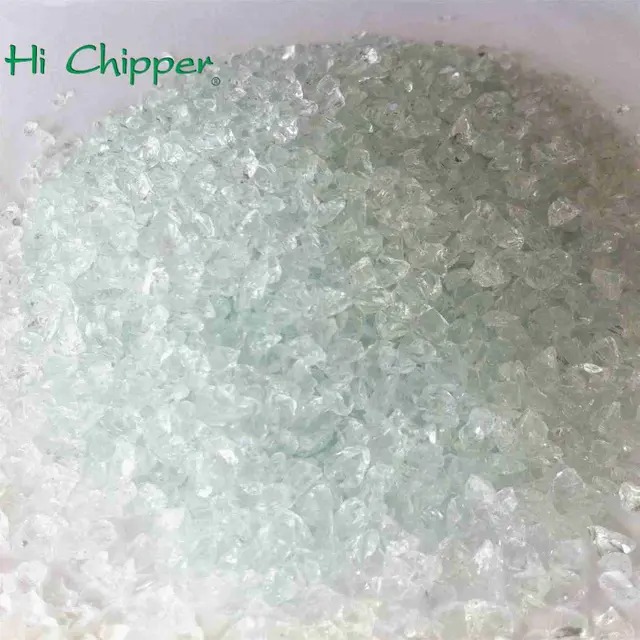
Why do experts prefer glass blasting media over garnet or coal slag? The benefits extend beyond simple cleaning. First, its performance on aluminum and stainless steel is unmatched. It provides a "white metal" finish that is bright and clean. Because the glass is clear and chemically inert, it prevents cross-contamination which is a frequent nightmare in industrial settings.
Secondly, it is a champion of visibility. When you use coal slag, the air fills with dark, heavy dust. Crushed glass abrasive creates much less dust, and the dust it does create is translucent. This allows operators to see exactly what they are doing, leading to higher precision and fewer mistakes. Furthermore, it is a dustless compatible media, meaning it works exceptionally well in vapor blasting systems where water is mixed with the abrasive to suppress airborne particles.
Speed: It cuts through thick coatings faster than most mineral slags.
Cost-Effectiveness: Being a recycled product, it is often cheaper than garnet or aluminum oxide.
Safety: Zero free silica makes it the gold standard for workplace safety.
Versatility: Works on wood, concrete, fiberglass, and all types of metal.
Choosing the right size is the most critical step in using glass blasting media. If you pick a grain that is too big, you might pit the metal. If it is too small, you will spend all day trying to remove a single layer of paint. Professionals usually categorize these by "grit" or "mesh" sizes.
Coarse glass (typically 20/40 mesh) is the workhorse of the industrial world. It is heavy-duty. Use this for thick rust, heavy marine growth on ships, or stripping multiple layers of industrial-grade epoxy from bridges. It leaves a deeper "profile" on the metal, which is actually beneficial if you plan to apply a thick new coating afterward, as the paint has more surface area to grip onto.
On the other end of the spectrum, fine grit (typically 70/100 mesh or higher) is for delicate work. If you are cleaning an engine block or restoring a vintage car's thin body panels, this is your tool. It provides a smooth, satin finish. It is also the best choice for cleaning brick or stone without destroying the original texture of the masonry.
In today's regulatory environment, "green" isn't just a buzzword; it's a requirement. Glass blasting media is one of the few abrasives that is truly eco friendly. Since it is made from 100% recycled glass, it diverts waste from landfills. It doesn't require the environmentally destructive mining processes used to extract garnet or the smelting processes that produce coal slag.
Furthermore, it is non-toxic. It won't leach heavy metals into the soil if you are blasting outdoors. Many industrial contractors prefer it for projects near water or in public spaces because it doesn't leave a black, oily mess behind. It is easy to clean up and, in many cases, can be reused several times before it loses its cutting edge, making it a highly sustainable resource for large-scale operations.
The scale at which glass blasting media operates is impressive. In industrial environments, efficiency is measured in square feet per hour. Because crushed glass is lighter than metallic abrasives, you can fit more of it into your blast pot by volume, leading to longer blast times between refills.
Bridges are constantly under attack by salt and moisture. Coarse glass media is excellent at removing the "near-white" metal required for specialized marine coatings. It removes the salt from the pores of the metal better than most abrasives. This prevents "rust bloom" from occurring shortly after the job is finished.
In the automotive world, the "cool" factor of glass blasting media is its heat management. It generates less frictional heat than heavier media. This prevents thin sheet metal from warping—a common problem when using sand or steel shot. In aerospace, its ability to clean turbine blades without changing the dimensional tolerance of the part makes it an essential industrial tool.
Using glass blasting media successfully requires more than just a blast gun and a compressor. You need to dial in your settings. Because glass is lighter, you often need to increase your air pressure slightly compared to when you use garnet. However, you should always start low and work your way up to ensure you aren't over-profiling the surface.
Nozzle Selection: Use a Venturi nozzle to maximize the velocity of the lightweight glass particles.
Flow Control: Don't open the media valve too wide. Glass works best with a lean "media-to-air" ratio. If you see a dark cloud, you are wasting material.
Moisture Control: Glass can clump if your air lines are wet. Always use a high-quality moisture trap or aftercooler.
While many people think of glass as a single-use abrasive, it can actually be recycled 2 to 3 times in a closed-loop system like a blast cabinet. After each use, the grains break down into a fine grit. You can screen the material to remove the dust and keep using the remaining grains for lighter cleaning tasks, further improving your ROI.
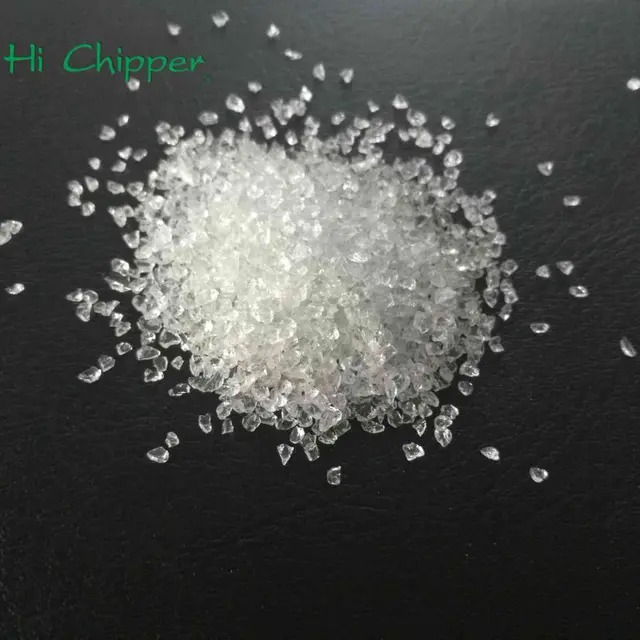
While we mentioned that glass is safer than sand, all blasting generates dust. However, glass blasting media offers a distinct advantage when paired with dustless or vapor blasting technology. Since the glass doesn't absorb water, it flows perfectly in slurry systems.
Vapor blasting with crushed glass media reduces dust by up to 92%. This allows other trades to work nearby without being shrouded in a cloud of debris. It also reduces the "containment" costs for industrial projects. Instead of building massive plastic tents, you can often work with much simpler barriers. Always remember to wear a NIOSH-approved respirator, even though there is no free silica; breathing in any pulverized material is never good for the lungs.
Even with a superior product like glass blasting media, you might run into hiccups. The most common issue is "flash rust." Because glass cleans the metal so thoroughly, the bare steel is immediately vulnerable to humidity in the air.
If you are using a dustless method, always include a rust inhibitor in the water. This gives you a window of 48 to 72 hours to prime the surface before rust starts to form. If you are dry blasting, ensure the surface is coated immediately after the blow-down. Another issue is static electricity. Glass is an insulator, so dry blasting can generate a lot of static. Ensure your equipment is properly grounded to avoid getting a nasty shock.
Q: Can I use glass blasting media in my standard sandblaster?A: Yes! It works in almost all suction and pressure blasters. You just need to adjust your media valve since glass flows more freely than sand or slag.
Q: Is crushed glass media better than soda blasting?A: It depends on the goal. Soda is better for very delicate cleaning where you want zero profile. Glass blasting media is better if you need to remove rust or create a surface that paint can actually stick to.
Q: Will it kill my grass if I blast outside?A: Glass blasting media is chemically inert and non-toxic. While the dust itself won't poison plants like some chemical strippers, a thick layer of dust might smother them. It is always best to lay down a tarp for easy cleanup.
Q: Is it safe for thin aluminum?A: Absolutely. By using a fine grit and lower pressure, you can clean aluminum without the risk of warping or "peening" the metal.
Glass blasting media has revolutionized the way we approach surface cleaning. It proves that you don't have to sacrifice performance to be eco friendly. With its ability to provide a clean, clear finish on everything from heavy industrial steel to delicate wood, it is a versatile powerhouse. By choosing the right size—whether it's coarse for heavy stripping or fine grit for detail work—you ensure a professional, cost-effective result every time.
We operate at the forefront of the abrasive industry, running a world-class manufacturing facility that specializes in high-quality decorative and functional glass products. Our factory is a leader in China, boasting large-scale production lines that transform recycled materials into premium glass blasting media for the global B2B market. We don't just supply products; we provide solutions. With years of experience serving industrial clients across Europe, North America, and Australia, we understand the technical requirements of high-stakes surface preparation. Our strength lies in our rigorous quality control, ensuring every bag of crushed glass abrasive we ship is clean, consistent, and ready for work. We are committed to sustainable manufacturing, helping our partners achieve their "green" goals without compromising on the power and speed their projects demand.
