
- All
- Product Name
- Product Keyword
- Product Model
- Product Summary
- Product Description
- Multi Field Search
Views: 521 Author: Site Editor Publish Time: 2026-02-12 Origin: Site


When tackling a tough surface restoration project, efficiency and cost-effectiveness are top priorities. Many industrial professionals turn to glass blasting media because it offers a clean, sharp edge that strips paint and rust with ease. However, a common question arises: can you reuse crushed glass blasting media?
The short answer is yes, but with significant caveats. Unlike steel shot or aluminum oxide, which are designed for dozens of cycles, crushed glass blasting media is semi-consumable. It shatters upon impact, transforming from a coarse grit into a fine grit dust. Understanding the physics of this breakdown is crucial for anyone looking to save money without sacrificing the quality of their finish. This guide provides an expert look at the recyclability, limitations, and best practices for managing your abrasive media.
To understand the reuse potential of glass blasting media, we must look at its structural composition. Most crushed glass is manufactured from 100% recycled bottle glass. It is amorphous, meaning it lacks a crystalline structure. While this makes it an eco friendly choice, it also means it is brittle.
When you propel coarse glass at high speeds against a hard substrate, the kinetic energy must go somewhere. In the case of glass, the media absorbs that energy by fracturing. Instead of bouncing back like a rubber ball, it shatters into smaller, sharper fragments. This fracturing is actually what makes it so effective at cleaning surfaces initially, but it limits how many times you can put it back through the blast pot.
Typically, you might get 1 to 3 cycles out of clear glass media before it becomes too fine to be effective. After the first hit, a significant portion of the coarse particles will have turned into fine grit. If you try to reuse it indefinitely, you will notice a sharp drop in productivity. You will spend more time blasting with less "bite" on the surface.
Not all blasting jobs are equal. The number of times you can reclaim your glass blasting media depends heavily on your equipment settings and the material you are cleaning.
Blast Pressure (PSI): Higher pressure causes more violent impacts. If you are running at 110 PSI to strip heavy industrial coatings, the glass will shatter almost instantly. Lowering the pressure to 60 or 70 PSI for delicate work might preserve the particle size longer.
Substrate Hardness: Blasting against a soft wood surface is much gentler on the media than blasting against a hardened steel beam. The harder the surface, the faster the glass turns to dust.
Nozzle Distance: The closer you are to the target, the more force is concentrated on the individual grains of crushed glass.
If you are using a dustless blasting system, the water acts as a lubricant and a cushion. This can sometimes marginally extend the life of the media by reducing the heat and friction of the impact, but the primary reason for choosing dustless setups remains the suppression of airborne particulates rather than media longevity.
Is it actually worth the effort to scoop up used glass blasting media? In many industrial settings, the labor cost of reclaiming the media outweighs the cost of buying a new bag. Because glass is relatively inexpensive compared to garnet or ceramic beads, the "math of reuse" often leans toward one-time use.
However, in a closed-cabinet system, reuse is automatic. The system pulls the used clear glass back through a cyclone separator. Here, the challenge shifts from labor to performance. As the media becomes finer, it loses its ability to create a deep "profile" or "anchor pattern" on the metal. If your project requires a specific mil-spec profile for paint adhesion, using recycled fine grit glass may lead to coating failure down the road.
We recommend monitoring the "cutting speed." If you find yourself holding the nozzle over the same spot for twice as long as you did when the bag was fresh, it is time to cycle out the old material and bring in fresh coarse stock.
If you decide to reuse your glass blasting media, you cannot simply shovel it back into the pot. You must deal with two primary enemies: contaminants and fines.
Used media is often mixed with the very stuff you were trying to remove—old paint chips, rust flakes, and grease. Putting this back into your machine can clog the metering valve or damage the nozzle. You must pass the reclaimed crushed glass through a fine mesh screen to remove large debris.
As the glass breaks down, it creates "fines." These are particles so small they behave more like smoke than an abrasive.
Visibility Issues: Excessive fines create a cloud in the blast cabinet, making it impossible to see your work.
Health Hazards: While glass blasting media is safer than silica sand because it contains no free silica, the fine dust is still a respiratory irritant.
Inefficiency: Fines lack the mass to remove heavy rust. They simply bounce off the surface without doing any work.
Experienced blasters know that used glass isn't "trash"—it's just a different tool. When coarse glass blasting media breaks down into a fine grit, it loses its aggressive cutting power but gains a polishing effect.
If you are working on a project that requires a very smooth finish—such as cleaning aluminum engine parts or thin sheet metal—the recycled fine grit might actually be superior to fresh coarse glass. It provides a gentler scrub and a satin-like finish without the risk of warping the metal.
If your goal is to prep a surface for a heavy-duty industrial epoxy coating, you must stop using recycled glass the moment it stops producing a visible "matte" finish. You need that roughness for the paint to grab onto. Furthermore, if you are using a suction-fed cabinet, the crushed particles can eventually become so fine that the suction tube can't pick them up effectively, leading to a sputtering flow.
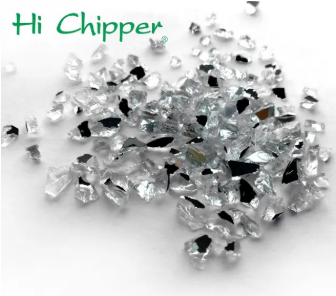
One of the strongest arguments for using glass blasting media—regardless of how many times you reuse it—is its eco friendly profile. Since it is made from recycled consumer waste, it keeps millions of bottles out of landfills.
When you finally decide the media is too fine for further use, disposal is generally straightforward. Because it is chemically inert and non-toxic, it doesn't carry the same "hazardous waste" labels as some metallic slags. However, remember that the dust now contains the particles of whatever you blasted off (like lead paint or heavy metals). Always test your waste stream if you are working on industrial or vintage coatings.
When calculating your overhead, treat glass blasting media as a high-performance, low-cost abrasive. Even if you only use it once, it often outperforms more expensive abrasives in speed-to-finish. The "reuse" factor should be seen as a bonus for light-duty cleanup rather than a core part of your financial strategy.
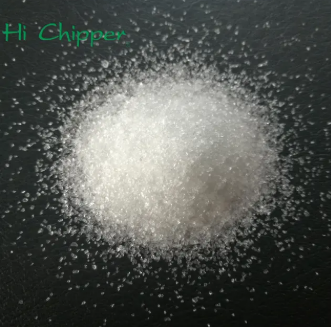
In large-scale industrial operations, the focus shifts from "reusing" to "optimizing consumption." To get the most out of every bag of glass blasting media, you need to look at your entire system.
Check your metering valve. A common mistake is "over-feeding" the media. If you see a blue or clear cloud coming out of the nozzle, you are likely wasting material. You want to see just a faint hint of the crushed glass. Using too much media doesn't make the job faster; it just creates more dust and breaks the glass down faster through "particle-on-particle" interference.
Wet air is the enemy of glass blasting media. If moisture gets into your lines, the fine grit will clump together, making reuse impossible. Invest in a high-quality air dryer. This keeps the clear glass flowing smoothly and ensures that your reclaimed media stays dry and sifting-ready.
Whether the media is new or being reused, safety is paramount. The term dustless blasting can be a bit misleading; while it reduces airborne dust, it doesn't eliminate the need for PPE.
Respiratory Protection: Always use a NIOSH-approved respirator. Even though glass blasting media is a safer alternative to sand, inhaling any fine particulate is dangerous over time.
Eye Protection: Crushed glass is, by definition, sharp. High-velocity shards can easily penetrate standard clothing. Use a dedicated blasting suit and a full-face hood.
Cleanliness: If you are sifting used media, do it in a ventilated area. The dust from the fine grit can settle on surfaces and be kicked back into the air later.
Q: Is crushed glass blasting media better than sand?A: Yes. It contains no free silica, which prevents silicosis. It is also more eco friendly and leaves a cleaner finish on the metal.
Q: Can I use a shop vac to reclaim my glass media?A: You can, but you must be careful. The fine grit dust can quickly clog standard shop vac filters. Use a cyclonic pre-separator if possible to keep the dust out of the vacuum motor.
Q: Does the color of the glass (clear vs. green) matter?A: Generally, no. Clear glass is often preferred because it allows for better visibility in the cabinet and doesn't leave a slight tint on very light-colored substrates, but the performance is identical.
Q: How do I know if my glass is too fine to reuse?A: Perform a "dust test." If you grab a handful of used media and it feels more like flour than sugar, or if it creates a cloud just by pouring it, it is likely too fine for aggressive blasting.
Reusing crushed glass blasting media is a viable way to extend your budget, provided you understand the limits of the material. It is a high-performance abrasive that thrives in its first few cycles but quickly transitions into a fine grit polishing agent. By sifting out contaminants and monitoring your surface profile, you can get the maximum value out of every pound of glass blasting media. Whether you are stripping a classic car or prepping industrial steel, this eco friendly and versatile media remains a top choice for professionals worldwide.
At Hi-Chipper, we have spent decades perfecting the art of recycled glass. As a premier manufacturer and exporter, we operate a massive factory that produces high-quality glass blasting media for clients across the globe. We understand the needs of the B2B market, where consistency and volume are non-negotiable. Our strength lies in our rigorous quality control, ensuring that every batch of crushed glass we ship—whether it is a coarse grade for heavy-duty stripping or a fine grit for delicate finishing—meets the highest industrial standards. We are not just a supplier; we are your strategic partner in sustainable surface preparation. From our advanced production lines to our global logistics network, we have the capacity to fuel your largest projects with clear, effective, and reliable glass abrasives.
